Friday, January 6, 2012

DVD Review: Dr. Willoughby

This article was first published at Blogcritics


The British sitcom Dr. Willoughby which only ran for six episodes in 1999 on ITV deserved a better fate.  A backstage comedy with much of its humor played off stereotyped characters it is nonetheless a funny half hour with a lot more laughs than a lot of the comic fare you're likely to find on TV today.

The series stars Joanna Lumley, perhaps best known for Absolutely Fabulous, as actress Donna Sinclair who plays the eponymous heroine in Dr. Willoughby, a cheesy afternoon TV soap opera.  Sinclair is a bitchy aging diva with very few if any redeeming qualities.  She is demanding, rude and jealous of those around her.  She throws herself at younger men.  She is the kind of prima donna who is quite capable of sabotaging a young actress whom she feels is getting too much attention while stooping to stealing rolls of toilet paper from the supply room.  The contrast between the vain, conniving, and insincere Sinclair and the calmly competent surgeon she plays on the show is a big part of the fun. Sinclair may be every bit the cliché, still Lumley manages to make her come alive. 

Sinclair is surrounded by an ensemble of familiar back stage types.   There is the dim witted insecure co-star worried about his role on the show, the naïve ingénue, a womanizing executive producer, a trouble making cleaning lady and a producer whose greatest desire is to be somewhere else.  They are the kinds of back stage types that have long been the fodder for show business comedies. Dr. Willoughby is not a show that looks to mine new fields.  It may make a politically incorrect joke here and there, but by and large it sticks to the tried and true.  It is just as happy to get its laughs out of a raunchy joke as some shows would be from insight into character.  These are broadly drawn characters played broadly by a competent cast of talented actors.

Story lines in individual episodes revolve around things like Sinclair's jealousy over the amount of fan mail others are getting, her reaction to a scandal rag story about her, and her co-star's problems with his ex-wife's alimony.  In one episode Sinclair sneaks off for some cosmetic surgery leaving the rest of the cast thrilled at her absence and speculating about what might be wrong with her.  In another, she forces her producer to hire an inept young actor she fancies only to discover he's gay.  Sub-plots deal with things like late contract renewals and product placement.  If Dr. Willoughby doesn't quite rise to the level of shows like Ricky Gervais' Extras or The Larry Sanders Show, both of which deal with similar material, it does a nice job on its own terms.

The DVD from Acorn has all six episodes on a single disc which runs approximately 144 minutes.  Subtitles are available, but there is no bonus material.


Wednesday, January 4, 2012

Music Review: Various Artists - Bar-B-Cue'n Blues

This article was first published at Blogcritics.


Lovers of traditional blues will want to check out Bar-B-Cue'n Blues one of series of compilations of remastered recordings of some of the great blues masters originally scheduled for release last fall from Catbone Unreleased.  The album, like others in the series, features fifteen previously unreleased tracks by the likes of John Lee Hooker, Howling Wolf and Muddy Waters as well as some lesser known names, eight different artists in all, and while there will be those who might have preferred complete albums devoted to the individuals, it is hard to complain about the opportunity to listen to some very fine blues that might well have gone under the radar otherwise.  It's no use looking the proverbial gift horse in the mouth organ. 

These are lovingly restored recordings worth checking out either for aficionados looking to fill holes in their collections or casual listeners looking for an introduction to the genre.  If there is anything to complain about, it is probably the liner notes.  Aside from a photo and some sketchy information about the performers—some of whom are not even represented on the specific album, there is no information about the specific tracks, either about the songs themselves or the performances.  A word or two about the date of the original and the musical accompaniment would have been welcome.  Still it is the music that's important, and there is a lot of good music.

The album opens with Chicago bluesman, Billy Boy Arnold's "Catfish."  Arnold, who has worked with the likes of Bo Diddley, is also represented by "Dirty Mother Furriers,"an almost seven minute swinging electric romp with lyrics that won't make it on NPR and "Sweet Miss Bea."  Harmonica virtuoso James Cotton—"Superharp," according to his website—has two tracks: a sweet blues, "So Glad I'm Livin" and the up tempo "You Know It Aint Right."  There's some boogie woogie from Jimmy Reed, "Boogie in the Dark" and an old home "Gone Fishin."  Trumpeter Jack Milman's "Tom and Jerry" is an easy going instrumental, although this is one of the tracks where it would clearly have been nice to have the names of the members of the ensemble.  Rock and roller Little Richard shows up with "I Don't Know What You've Got," not quite as flamboyant as some of his pop hits.

Then there's the big three.  Muddy Waters does "I Feel So Good" and "All Aboard," a song that echoes the train.  Howling Wolf's "Louise" is a classic and he adds a playful "Built for Comfort."  The album is rounded out John Lee Hooker's "Sally Mae," introduced with a throbbing guitar and a six and a half minute blast of blues improvisation on "Should Have Been Gone."

What Bar-B-Cue'n Blues lacks in depth, it certainly makes up for in variety.  It gives listeners a nice mix of representative artistic home cooking.  These are the folks that have worked in the roadhouses and the bars; they know the fields of Mississippi and the streets of Chicago.  They are the "blues" collar workers, and it is a shame that some of these names are not even better known.  An album like this only serves to illustrate how large the field of really fine blues musicians is.


Monday, January 2, 2012

Book Review: Hurt Machine, by Reed Farrel Coleman

This article was first published at Blogcritics


Hurt Machine is the seventh in Reed Farrel Coleman's Moe Prager detective series, and given the opening in which the sixty plus Prager announces just after a pre-wedding party for his daughter that he has been diagnosed with cancer, it may well turn out to be the last.  Bur when his ex-wife and partner turns up at the party and asks him to look into the murder of her estranged sister, an EMT who had been disgraced after she and her partner refused to aid a dying restaurant worker, Prager is embroiled in a complicated chain of events that has him dealing with her colleagues in the fire department angry that she has given them a bad name, reluctant witnesses and old friends eager to help with his investigation as he tries to find her killer.  There are a lot of discoveries to be made, and just when you think you've come to the truth, there's something else to discover.  Coleman is very good at keeping readers guessing.

Set mostly in Brooklyn and Manhattan, Coleman is almost as adept at creating a sense of place as a master like George Pelecanos is with Washington,DC.  Brooklyn especially almost functions as a character itself.  Whether he is talking about the boardwalk at Coney Island or the newly upscale Park Slope, the Belt Parkway or Stillwell Avenue, stickball or ring-a-levio, this is as realistic a portrait of Brooklyn as you are likely to come across. He knows the finer points of Nathan's French fries and the subtleties of Brooklyn pizza.  He knows the bars where the firemen drink and those that cater to the ordinary locals.  If writers are able to stake a claim to a locale, Coleman has a good case for making Brooklyn his own.

Grown old and sick, Prager is no rough guy private eye.  He is as likely to collapse from too much to eat and drink as he is from fighting with some younger tough.  There are women, but his current girl friend is in Vermont and the young beauties he comes across in his investigations call him grandpa.  Still, if he is not now what he has been, the years have brought him what the poet calls the philosophic mind.  He has a knack for putting his insights about the human condition and life in general in pithy, almost epigrammatic, tidbits of wisdom.  "It is the great folly of humanity, the search for self- knowledge and significance."  "Time to think is life's Petri dish." "Only in retrospect is life a simple series of easily connected dots."  The book is filled with this sort of philosophizing.

Nonetheless, Prager is committed to finding the truth.  It is almost as if he is looking for one last moment of action before what might be the end.  Like Tennyson's "Ulysses," it's not too late to seek a newer world.  He is dogged in his pursuit of the murderer, what he has lost in physical power, he makes up for with the street smarts he has gained over the years.  Still he is old, and there is always a question about how he will hold up and whether he is equal to the task.

The problem I have coming to a book like Hurt Machine without having read any of the others in the series is all the references to people and events that seem to have been treated in the earlier novels.  I have the feeling that everything would be more meaningful to me if I understood more about the relationship between Prager and his ex, if I knew more about Nathan Martyr who turns up as a restaurant owner late in the investigation, or if I knew what happened to Prager's first wife.  While I am bothered by not knowing as much about such things and many others, it is worth noting that the Hurt Machine is quite good enough to make me want to read the first six to find out what I've been missing.


Wednesday, December 28, 2011

Book Review: Van Gogh: The Life, by Steven Naifeh and Gregory White Smith

This article was first published at Blogcritics.


Contumacious is not too strong a word to describe biographers who subtitle their tome, eight hundred and fifty plus pages though it may be, "The Life" as do authors Steven Naifeh and Gregory White Smith: Van Gogh: The Life.  "The Life" suggests that here the readers finally have the definitive version, the last word—everything we ever wanted to know about what was surely one of the most tortured of lives.  Clearly that is not the case.  For all its length and detail, it postulates a controversial theory of the artist's death which is sure to raise at least some hackles and generate some biographical blowback.  "Van Gogh: A Life" might have been a more appropriate title.

Viewers of 60 Minutes are most likely acquainted with the authors' theory about Van Gogh's death.  Long thought to have been a suicide,  Naifeh and Smith treat that idea as little more than a tall tale made legend by Irving Stone's novelization and the film that followed, Lust for Life, and a legend  filled  with holes.  While their arguments are presented with conviction, they are arguments, even though they have been around for some time, by no means accepted by all Van Gogh scholars.

Based primarily on a prior scholar's 1956 interviews with Rene Secretan, an octogenarian who came forward near the end of his life to explain his own role in the painter's 1890 death in what he claimed was an attempt to correct some of the romantic liberties taken in the film.  Although Secretan doesn't seem to have confessed to anything other than harassing the painter whom he and his young friends considered nothing short of a crazy man, he did have access to the kind of gun that people thought must have been the weapon Van Gogh used, a weapon that was never found.  Add to this a lot of circumstantial evidence including the facts that none of the painter's equipment was found at the site where he supposedly shot himself, the peculiarity of trying to commit suicide by shooting yourself in the stomach, Van Gogh's somewhat less than adequate statements about what he did, as well as a number of other tidbits, and you've got the makings of a case. 

A case at least for an accident—Secretan was hassling the painter and the gun went off.  He was frightened and ran off.  The authors never really accuse the young man of actually murdering the painter, but they are clearly of the opinion that however it happened, it was Secretan and his gun that were involved.  Their theory may convince some, it may not others; one thing for sure, it will sell books.

In general, the picture they paint of the artist is not very flattering.  For most of his life he is shown as demanding and self absorbed to the point that he was completely unable to get along with anyone, be it family, friends or fellow artists.  Even his brother Theo who supported him for most of his adult life was unable to deal effectively with his extravagant demands both financially as well as emotionally.  Certainly though many of his problems were the result of his mental state, the Van Gogh pictured in this book would have tested the patience of a saint, let alone a normal human being. 

Strange behavior is often tolerated in great artists.  It is the price you have to pay for genius.  Van Gogh's problem was that not until the last few months of his life that his greatness was even begun to be recognized.  For most of his life, he was considered little more than a mad man.  His work was ridiculed.  His impassioned ideas were derided.  His behavior was outlandish.  Naifeh and Smith are meticulous in documenting the disasters that followed him from his early career working in art sales, his flirtation with religion, and his eventual devotion to art, but through it all Van Gogh is presented as such a head case that one has to wonder how it was he ever managed to create any of the masterworks for which he has become so loved.  Not only does one have to tolerate genius; one has to tolerate all those crazies who may turn out to be not so crazy after all.  If anything, the reader comes away from this life, recognizing that often there may be very little difference between genius and madness.


Wednesday, December 21, 2011

Book Review: War Horse: The Making of the Motion Picture

This article was first published at Blogcritics.

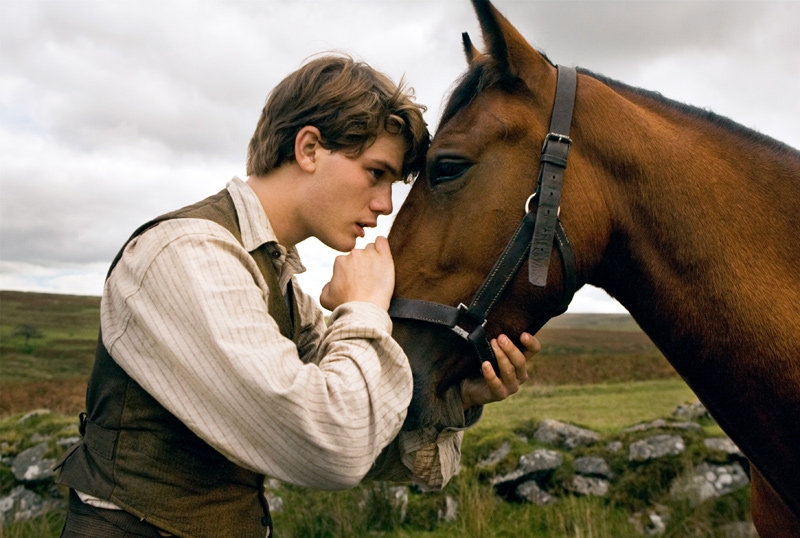
Michael Morpurgo's 1982 young adult novel War Horse, certainly moderately successful at the time, has sky rocketed in acclaim in recent years both in its own right and perhaps even more importantly as an inspiration for artistic adaptation.  First there was the theatrical tour de force adapted for Great Britain's National Theatre by Nick Stafford, which in its Broadway incarnation was the winner of the Tony Award for Best Play and is still running at Lincoln Center.  And now, opening on Christmas Day comes the much ballyhooed film adaptation by director Stephen Spielberg. 


Perhaps because of the National Theatre production's innovative solution to the problem of putting horses on the stage through the use of giant puppets, it generated a fascinating documentary called Making War Horse.  The film, available on DVD, besides dealing with the story itself, stresses the creation of the puppets in collaboration with the Handspring Puppet Company and the training of the puppeteers necessary to create the illusion of lifelike horses.  Not to be outdone, the film too has generated not a documentary as of yet but an elegant "pictorial moviebook," War Horse: The Making of the Motion Picture. No puppets it's true, but more than 140 brilliant photos from the film in their place. 

Divided into three sections the book takes you on a visual journey first through the film's story, then its production and finally gives a short nod to the history of horses in warfare.  "Joey's Journey" outlines the basic plot of the movie with stills from the film, comments from the filmmakers and even an excerpt or two from the script.  There are individual photos of the large cast and brilliant shots of the British countryside.  But the really exciting visuals are those capturing the interaction of men and the horses first on the farm and then at war. 

The second section takes you behind the scenes.  While it does provide some interesting insights like the ten different horses playing the role of Joey and the shot of the makeup artist working on one of the equine actors, the whole section runs little more than a dozen pages, much of it taken up with commentary.  "The History of War Horses" uses illustrations from history to highlight the role of horses from ancient Egypt through World War 1, with the emphasis on the latter.  As history it is little more than a sketch, and at best will whet the interested reader's appetite for something more substantial.  Still this is after all a book about the making of a movie, and one can't expect a historical dissertation.

There are forewords by Spielberg, producer Kathleen Kennedy, who seems to have been the originator of the project, screenwriter Richard Curtis, and author Morpurgo.  Curtis has an interesting tidbit about how his film Four Weddings and a Funeral beat out Spielberg's Schindler's List for a French foreign film award, the kind of anecdote you can dine out on.  Morpurgo talks about the writing of the novel and somewhat fetchingly confesses his preference for cows over horses at the time he was writing.  One imagines recent developments may well have changed his mind.

If the film manages to garner the same kind of critical acclaim as the play, this is a book that may well share that popularity.  Although it is quite well done in its own right, it seems to me that its success is clearly tied directly to the success of the film.


Tuesday, December 13, 2011

Music Review: Jimmy Owens - "The Monk Project"

This article was first published at Blogcritics.

Thelonious Monk is a good example of one of those musical geniuses who early on in their careers created a sound that was considered experimental and cutting edge but with the passage of time has become standard fare on the jazz menu. The innovative young pianist composer became the revered grand master, and after his death in 1982 nothing short of a legend. And nothing says legend like fellow musicians paying tribute to your music by making it their own. It's one thing when people copy what you've done; it's quite another to use what you've done as an inspiration to build upon and create.


Trumpeter Jimmy Owens' The Monk Project is just such a tribute. "Thelonious Monk," he says, "is one of the world's premier jazz artists and composers.  Many of his compositions provide (even the best) jazz artists with musical challenges, such as the opportunity to maneuver through difficult chord changes and execute unusual melodies.  I chose compositions that people may have heard before, however, when I arranged the pieces I wanted to give them a different feeling than how they have been performed in the past."  Owens has taken the music and transformed it into something new, yet something still quite recognizable.  But more importantly, something that might well have brought a smile to the face of the legend.  The Monk Project is jazz as it ought to be.

The trumpeter leads a septet consisting of Wycliffe Gordon on Trombone, Marcus Strickland on tenor sax and Howard Johnson on the tuba and baritone sax.  Kenny Barron is on the piano, Kenny Davis on bass and Winard Harper plays drums.  It is a group that combines veteran talent with new young voices—age and youth, a winning combination.  They feed off each other as though they have been playing together for years, and in some cases they have.

There are ten tracks on the album beginning with a swinging arrangement of "Bright Mississippi." "Well You Needn't" follows featuring Owens on the flugelhorn and the septet's rhythm section.  Owens and Barron have in fact played together for years and it shows.  A funky "Blue Monk" is a real show stopper with some down and dirty trombone from Gordon.   This is one of the highlights of an album filled with highlights. The group's take on "Stuffy Turkey" is treated more playfully, in contrast to the low down "Blue Monk."  Kenny Davis gets an opportunity to get out front on the bass. 

"Pannonica," one of Monk's most elegant melodies, is slowed down some in Owens' hands and achieves an almost more impressive eloquence.  They follow with an up tempo version of "Let's Cool One" with Strickland's sax featured in the opening solo.  "It Don't Mean a Thing (If It Ain't Got That Swing)" will have you bopping and nodding again with some low down improvisation.  Owens and the combo play around with rhythms on the complexities of "Brilliant Corners," and the album follows with a contemplative (what else would you expect) take on "Reflections."  A ten minute ride through "Epistrophy" which gives each of the seven a moment to shine ends the album with style. Scheduled for release in January of 2012, The Monk Project is an album to keep your ears open for.


Sunday, December 11, 2011

Music Review: Rob Morsberger- Ghosts Before Breakfastt

This article was first published at Blogcritics.

Along with the announcement of next week's digital release of Rob Morsberger's latest album Ghosts Before Breakfast, comes the shocking news that that the singer is suffering from brain cancer.  "As I was finishing off my record," he says,"I unexpectedly received a diagnosis of grade 4 Glioblatoma. . .the worst manifestation of the most malignant kind of brain cancer.  This is not a survivable illness."  Given this kind of tragic news, a critical review of the album might seem like a gratuitous exercise.  That is not the case, not for the artist.  For the artist life goes on as long as the art goes on.  And If Morsberger is anything, he is an artist.  If his last album, the intellectually challenging Chronicle of a Literal Man, didn't prove that, this latest can't help but do the job.

Ghosts Before Breakfast welds the patented density of Morsberger's allusive lyrics and subject matter to a variety of musical styles both within and between songs.  These are songs that will keep listeners humming along as they puzzle over meanings.  These are songs that will keep listeners humming along as they puzzle over meanings.  This is true art, and the real thing is never easy.  There are eleven songs on the album, and the more you listen, the more you recognize there isn't a loser in the bunch.

The title song, which opens the album, was written as a score for a 1927 silent film of the same name by Hans Richter, a Dada artist and abstract filmmaker.  The chorus is made up from titles of some of Richter's other films and most of the rest of the song reels off lists of images associated with abstract art.  "The song," Morsberger says, "is really about making art, and being an artist."  This is followed by "The Great Whatever" a song that rants against a god that allows a world of suffering with a Latin beat.  Images like the wizard behind the curtain, the terrorist who looks to god for instruction, the watchmaker whose watch has gone wrong fill the song, but despite it all the negativity some sort of spiritual practice is necessary.  "The Distinguished Thing" is a celebration of the novelist Henry James who died lamenting that there were still so many stories left untold, a lament that must cut close to home.

"The Wild Wind" is a musical tour de force that traces the history of the singer's hometown from the time of the Indians up through the 20th century in a variety of musical styles from rock to ragtime. "A Man of Much Merit" is based on a letter from Charles Floyd, the only man to die on the Lewis and Clark expedition and "Rocket Science" is a tongue in cheek nod to some of the older rocket songs.  "Celebrity Artist" is a satiric turn where Morsberger reminds me of the They Might Be Giants sound (another name to go with Bob Dylan, Tom Waits, Randy Newman and all the others he is normally compared with).  Speaking of Dylan, "For Heaven's Sake" is a ballad that comes close to his growl, except that Morsberger sounds a hell of a lot better.  "Cobblestones," on the other hand, is a more personal ballad and vocally is much simpler, almost sweet in its sadness.

 "Christina In Your Salon," a song about  Christina Alexandra, 17th century Queen of Sweden, ends the album in the typical Morseberger manner: you want a song about a cross dressing intellectual who studied with Descartes?  I can write it for you.  The next to last song on the album "Feather in a Stream" is a personal statement that almost seems to have been written with his health problems in mind, although his publicity seems to suggest that these were all written before he knew about the cancer.  The metaphor of the feather carried willy nilly down life's stream is compelling under the circumstances, and the lush orchestration which ends the song is spiritually elegant.  Were it me, I would have ended the album here.