Monday, February 15, 2016
A Note on Hilary Mantel's "Beyond Black"
Starts off like a house on fire, but slows up in the middle, comes back with an exciting ending. Putting together an over weight psychic and her rail thin officious aide, mistaken for a lesbian couple trying to come to terms with a variety of evil spirits, is something quite different for the author of "Wolf Hall."
Saturday, January 9, 2016
Book Review: "The Whites" by Richard Price writing as Harry Brandt
Sunday, April 26, 2015
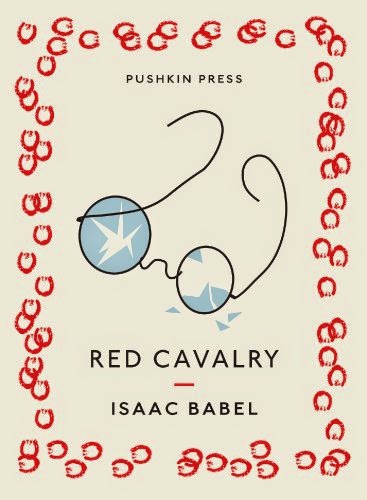
Book Review- "Red Cavalry" by Isaac Babel
Monday, January 14, 2013
Book Review: The Flame Alphabet, by Ben Marcus
Thursday, December 20, 2012
Book Review: Unusual Uses for Olive Oil, by Alexander McCall Smith
Monday, October 8, 2012
Book Review: Damned, by Chuck Palahniuk
Friday, September 23, 2011
Book Review: A Man of Parts, by David Lodge

Article first published as Book Review: A Man of Parts by David Lodge on Blogcritics.
Born in 1866, deceased, 1946, prolific British author, H. G. Wells' life spanned a period of radical social and cultural change in England and the world in general, and few lives were more in tune with those changes both publically and privately than Wells. He was able to achieve intellectual and political influence in spite of his lower class beginnings. He was a popularizer and disseminator of scientific knowledge. He was a socialist and pacifist. He wrote popular and serious fiction, journalism and criticism, history and political tracts. He supported women's rights. And with all of his intellectual pursuits, he still had time to pursue a sybaritic sexual private life with the gusto of a randy satyr. A firm believer and practitioner of free love and open marriage, the story of his life is the story of his hopping from one bed to another during and between hours set aside for writing, thinking and conversation. His is a life made for a novel.
David Lodge, not quite as prolific as Wells, but prolific enough in his own right, knows a good subject when he sees one. His new novel, A Man of Parts, is his attempt to capitalize on that good subject. It is a fictional representation of the life of Wells, and since Lodge is a literary scholar of some note, it is based on a good deal of solid research. And that may be a problem for many readers. This is a novel that reads like a biography. The author protests right at the beginning that he has taken the novelist's license to invent in things like character's thoughts and feelings and that he has even taken the liberty of portraying events that should have happened. This may be true, but most of what has been invented is presented exactly as it would have been in an academic biography. The voice of the writer is the voice of a scholar. His methods are the methods of a researcher: the book is filled with quotations (undocumented it's true, but documentable). There are few conversations. There are few dramatized scenes. Little is shown, much told.
Perhaps realizing this, Lodge creates a self questioning internal voice which appears at times in the course of the novel to question Wells—something like what one of the great Victorians called "the dialogue of the mind with itself." It is a probing voice that challenges Wells' interpretations of events and relationships, a voice that questions his motivations and explanations. It is a way to add some dramatic tension to the narrative, and is an effective way to remind the reader that this is fiction not fact.
Still the book contains a lot of material that could pass for, if not fact, at least for non-fiction. There is a good deal of explanation and critical interpretation of Well's ideas as expressed in his work, not only the famous pieces, but from almost everything he wrote. Moreover there is also a good bit of criticism of the work of many of the other literary figures that pass through the book's pages: Henry James, Arnold Bennett, George Bernard Shaw, Rebecca West, as well as a number of lesser lights. This shouldn't be unexpected, literature was one of the central elements of Wells' life and he was surrounded by literary lions, and Lodge, after all, is a literary critic of some note. But it is not the average novel reader that will be enthralled with a discussion of Well's criticism of Fabianism in "The Misery of Boots."
On the other hand what may well be of greater interest to that average reader of novels could be the other central element of Well's life, the man's sexual adventures. As prolific as he was a writer, he was equally prolific in the bedroom—his various studies, hideaway cottages, hotel rooms, and even al fresco—if the gossip is to be believed. Suffice it to say, the women in his life were legion. There were long term relationships; there were one night stands. There were young infatuated virgins; there were celebrity seekers. There is enough of the titillating in this man's life for an epic to compete with Frank Harris, but this book isn't it. It's not that the lovers aren't there; they are. It's not that we don't follow them into bed, we do. It is simply that the descriptions of sex and the discussions of sexuality are G-rated. In this age of rampant pornography, A Man of Parts contains some of the least sexual descriptions of sex one could imagine. Whether that's a good thing or not, I leave to the individual reader's moral convictions; I am only interested in pointing it out.
At the end of the day, this is not a book for every reader. There are many who will be fascinated by the life of Wells and Lodge's literate portrayal of him and his contemporaries. He is dealing with sensational material, but he eschews sensationalism. He is more interested in ideas and psychology than he is exciting the reader. Lodge writes with wit and insight. If you're looking for adult ideas written in stylish prose, this is a book you want to read. If you're looking for something more sensual, you may want to look elsewhere.
Saturday, August 20, 2011
Book Review: July, July, by Tim O'Brien
Not content to be a one trick pony, O'Brien's new novel, July, July, marks his second attempt at exploring new territory. While not leaving the war behind completely, O'Brien here weaves it together with other elements as part of a larger tapestry. There is a Viet Nam veteran. There is the story of his ordeal on the banks of the Song Tra Ky. There is the picture of his life consumed by drugs, failed romance, and the loss of a leg. But this is only one of the stories of blighted lives and wasted promise.
In an interview (http://www.readersread.com/features/timobrien.htm), O'Brien point out he as much interested in the fact that ordinary everyday life goes on even in the face of historical cataclysms. Those who didn't fight go on living. Yet in some sense, even from this perspective, the war may well be the two ton gorilla in the novel.
July, July uses the thirtieth reunion of Class of 1969 of Darton Hall College in Minnesota as a frame for individual stories focusing on critical moments in the past of ten of the celebrating alumni. Usually, after each story, the reader is brought back to the reunion for a glance at how these children of the war years have turned out. We see them before we know their individual stories, and we see them after; we see them singly, and we see them as part of the group. We see them as individuals, and we see them as representatives of an era. In a sense the hero of the novel is the Class of '69.
It takes a few pages to get beyond the confusion of which name goes with which character, but unless the author provides a general prologue in which each parades past to the tune of a lively character sketch, such confusion is inevitable. Yet since O'Brien deftly defines each with telling strokes--the pot bellied mop manufacturer, the alluring temptress with two husbands and a lover, the female minister fired from her pulpit for house breaking--the early confusion is kept to a manageable minimum.
As in any group some characters, some stories are more memorable than others. Everybody can't be the Wife of Bath. Dorothy Steir is a rock ribbed Republican with a pool and a house and a patio, trying to come to terms with a radical mastectomy. Ellie Abbot sneaks off for an affair only to have her companion drown in a lake while she watches from the shore. David Todd loses a leg in Viet Nam and a wife on Christmas morning ten years later.
July, July however is not simply a collection of stories set in a frame to keep them neatly in place a la Boccacio or the Arabian Nights. These are works in which it is the individual tale--the part, rather than the whole-- that is focus. July, July tries to knit stories and characters together so that the whole is something more than the sum of its parts.
Stories complement one another. If one character goes to war and wrecks his life, another runs off to Canada, and though he manages to avoid the war, becomes no less an emotional cripple. If they marry at all, they marry the wrong people. If they are successful in their careers, they find that success unfullfilling. No matter what they have, they always seem to want something else, more often than not something they cannot have.
Spook Spinelli, class tramp, is a good example. She has one husband, she wants another. She gets a second, she wants a lover. She gets him and she still comes to the reunion looking for something more. Marv Bertel, he of the mops and bellies, on the other hand, wants only one thing--Spook, and he's wanted her for thirty one years. Spook may never get what she wants because she is not really aware of what it is; Marv knows exactly what he wants, although one is tempted to wonder if he would be happy if he ever got it.
Still they could dream: "And then for some time they fantasized, taking turns at inventing a happy ending for themselves. . . .It had become the ninth day of July, Sunday ,just before three in the morning, a new age, a new century, and for both Marv Bertel and Spook Spinelli, the turbulent world of their youth had receded like some idle threat or long-lapsed promise. Nixon was dead. Westmoreland was in retirement. That war was over. Now there were new wars. But still, as with Spook and Marv and several million other survivors of their times, there would also be the essential renewing fantasy of splendid things to come." (pp, 318-319)
These "survivors of their times" come to the reunion looking for something of that splendid promise that never quite came. Some find it, not always where they expected, but find it nonetheless. Of course, whether what they find is something lasting is another question. Some go home as empty handed as they came.
July, 1969, as the author reminds us, was a year of miracles. There were the amazing Mets. There were men walking on the moon. It was a time when the world was all before us. The class of '69 was graduated into a world where anything and everything seemed possible. July, 2000, when they come together once again, that optimism seems little more than naive.
Even if you live in a house in the suburbs, even if your husband is a senior vice president at Cargill with a matched set of Volvos and you've canvassed your neighborhood for Ronald Reagan, you can still wake up to find that your husband can't bring himself to look at the scar where your breast used to be. You can find kinship with a Viet Nam veteran shot in both feet, with a prosthesis where his leg ought to be. And if you find yourself walking home alone in a drugged euphoria in the middle of the night, there may well be some who are finding comfort in each other, even as you have found some comfort.
If July, July never quite reaches the heights of O'Brien's best work, it is a much more successful piece of fiction than Tom Cat in Love, his last attempt to stretch his horizons and a book that bodes well for future attempts.
Tuesday, August 9, 2011
Book Review: Chike and the River, Chinua Achebe
| HTML |
|---|
| Article first published as Book Review: Chike and the River Chinua Achebe on Blogcritics. |
Best known as one of the major voices of contemporary African literature ever since the publication of his first novel, Things Fall Apart, Nigerian writer Chinua Achebe has made it one of his goals to be a spokesman for his native culture and its values. In a world still in many cases dominated by colonialist ideas about the dark continent, his work clearly demonstrated the falsity of those ideas. It emphasizes both European ignorance and African social norms. There is a clash of cultures played out in Things Fall Apart, and although the Europeans with their religion and their armies win out, an impressive traditional culture has been lost. The advocacy for this tradition has been the work of Achebe's life.
Chike and the River a novelette written for children back in 1966 is now being published in the United States for the first time. It is the story of the 11 year old Chike who is taken from his village to live with his uncle and go to school in Onitsha on the banks of the Niger. When he hears exciting tales about the town on the other side of the river from his school friends, the dream of crossing to the other side and seeing this fabulous place consumes the boy. The problem is he has no money for the ferry fare. The story goes on to describe his various attempts to get the money, and his eventual discovery when he does that things don't always live up to their hype.
Chike is an endearing character in his naiveté and wonder who learns valuable lessons about life as his story progresses. He is set in contrast to his friend S. M. O. G. who is seemingly more worldly wise and Ezekiel, a trouble maker, nicknamed "Tough Boy." Even here though, the boys are more mischievous than they are evil.
As in Things Fall Apart, although without interspersing any of the Ibo words and phrases, Achebe uses a prose style reminiscent of fable and the primitive folk tale. He includes traditional stories like that of the quarrel between the bird and the river. He includes proverbs: "little drops of water make the mighty ocean." He includes metaphoric adages on how to live: "Why should we live on the River Niger and wash our hands with spittle." It is a style rich with the wisdom of a continent and its culture, and it is told in a style likely to capture the imagination of the younger reader. It is a style echoed in the Edel Rodriguez' primitive folksy illustrations for the edition. Chike and the River is a book that can both teach youngsters about other cultures and entertain them while doing it.
Tuesday, July 26, 2011
Book Review: Sunset Park, by Paul Auster

Article first published as Book Review: Sunset Park by Paul Auster on Blogcritics.
Paul Auster returns to Brooklyn in his 2010 novel, Sunset Park, although not with the same kind of enigmatic Kafkaesque overtones of his earlier visits. His characters are faced less with an incomprehensible world neither they nor we can understand, than they are victims of their own fears and insecurities. Reminiscent of the group hero featured in some of the naturalistic dramas of the last century, the novel is less about one central figure than it is about a set of people, four squatters in an abandoned house in a run-down Brooklyn neighborhood and the family of one of those squatters. Different sections of the book are told from the point of view of six different characters.
While these are all different kinds of people in many respects--a young woman who sells real estate, a graduate student writing her dissertation, a college drop out in love with a teen ager, a musician "wannabee" who runs a fix it shop, an independent publisher, and an aging actress—they all have one thing in common. In one way or another they are all wounded beings. Indeed, in one way or another, the wound is the dominant thematic trope of the novel. From the time the idea is developed in a schoolboy's essay on To Kill a Mockingbird and its reiterations in a variety of discussions of the classic forties film The Best Years of Our Lives and the emphasis on injury ending career of Cleveland Indian pitcher, Herb Score and others, it is made clear that wounds are endemic to life. As one character asserts, "wounds are an essential part of life, and until you are wounded in some way, you cannot become a man." It is the necessity to go on living in spite of one's wounds that is man's burden and in some sense his blessing. It is in overcoming one's wounds, physical or emotional, that one realizes his or her potential as a human being.
If there is a central character in the book, it is Miles Heller. Son of the publisher and the actress who were divorced soon after his birth, he has left school and broken off all contact with his family as a result of intense guilt over the death of his step brother. When the novel begins, he is living in Florida, working as a trash remover in houses which have been foreclosed on, and having an affair with an underage teen. He returns to Brooklyn to live as a squatter in Sunset Park with Bing, an old friend and two other women, Alice and Ellen, who had been roommates in college. All four are more or less emotionally wounded in one way or another, as are Miles' parents, and all of them must find a way to live in spite of those wounds.
But it is not only the characters that are wounded. The world that they live in is wounded as well. It is a world where a financial crisis has put people on the streets collecting cans and bottles for the deposit money, where the publishing industry is going down the drain, where dissidents are not tolerated. It is a world where the broken and old, everything from typewriters and houses to people are simply abandoned and left to rot, where the dead are buried and forgotten. Auster has written a compelling critique of our modern society and its effects on the people who are doomed to live out their lives in it. Whether or not it is possible to live productively and meaningfully in such a world is the question, it is a question that may or may not have an answer by the time you get to the end of Sunset Park.
Paul Auster is a truly exciting writer and in Sunset Park, he is at the top of his game. He creates characters that are human in their flaws and their passions. He puts them in situations that test their humanity. He writes with a style that is both literate and accessible. He is a novelist to be reckoned with.
Monday, July 4, 2011
Book Review: Life of Pi, by Yann Martel

This article was first published at The Compulsive Reader.
Life of Pi
by Yann Martel
Hardcover, 336 pages
Publisher: Harcourt; (June 4, 2002)
ISBN: 0151008116
The vacuum created since the last great story about a boy and a tiger fell from grace, victim to the zealots of political correctness, has been filled, by a Booker prize winner no less. And although Piscine "Pi" Molitor Patel, who has been named lovingly after a Parisian swimming pool, is a much more complex character than Little Black Sambo and his Bengal tiger doesn't run round in circles turning himself into ghi, there is salvation every bit as magical in both stories.
Life of Pi is the story of an Indian boy, one of two son's of the Pondicherry zoo owner, with a keen insight into animal behavior garnered from growing up in their company and an innate passion for the varieties of religious experience. In his early teens, the family abandons the zoo, sells off the animals and embarks on a Japanese cargo ship to emigrate to Canada accompanied by some of the animals en route to North American zoos. In the middle of the night, there is a shipwreck and it seems that Pi is the only one saved. Most of the rest of the book is the narration of his fantastic experiences and adventures during his more than two hundred days in a lifeboat before he reaches the shores of Mexico.
This really doesn't give the ending away, as since Pi Patel is the narrator of this epochal journey over the Pacific Ocean in the company of, a hyena, and orangutan and a very oddly named Bengal tiger, and as since an introductory section assures the reader that said Pi Patel has grown to maturity, pursued university degrees in religion and zoology, and raised a family of his own, there is little suspense about the ultimate fate of the hero. It is the nature of first person narratives that the narrator must live to tell the tale, be it on the open sea in the company of man eating tigers or marooned on some island, unless the author decides to indulge in some sort of trickery, of the "by the time you have read this I will be dead" variety, or "I put this manuscript in this bottle (although our hero does put a message in a bottle) in the hopes that it will be found," and so on. Thankfully Martel does not indulge.
Suspense is not really what he is after, and if there is a surprise at the end, it is not tacked on to get the author out of a corner he has ineptly managed to paint himself into, rather it is a significant insight into what has gone before. And this surprise one cannot give away.
Pi is an engaging narrator. Witty: of an orangutan arriving at his life boat floating on a barge of bananas as the bananas break apart and float away, laments that the bananas split. Clever: in the confines of his life boat he manages to mark his territory and keep it free from the various beasts who share his world. Humble: Over and over again his emphasis is on the fortuitous fate that saves him--flying fish bombard his boat providing divine manna, a wounded zebra serves to temporarily satisfy a threatening hyena, the tiger is sea sick allowing time for safety precautions.
His is a miraculous story; a story, he says, that must make you believe in God. For the survival of a lone Indian boy on a miniature version of Noah's ark crossing the Pacific Ocean to arrive in Mexico can only be attributed to some kind of divine intervention, especially if one is prone in that direction from the start. Religiosity is perhaps the most notable of Pi's character traits even before he leaves his home in Pondicherry to emigrate to Canada with the remains of their zoo. Religion, every and all religions, have for him a wonder and a truth. Born a Hindu, he chooses to be baptized a Christian and practice Islam, not instead, but as well. Crosses, prayer rugs, statues of Ganesha are to Pi what cricket bats and soccer balls are to other children. It is not one, then another--a bouncing between the truths of first one and than the other, but rather an embracing of all at once. Truth is in God, and any religion which recognizes that is a religion worth pursuing, and the pursuit of any one faith need not interfere with the pursuit of the others.
Moreover it is not only in the miraculous event that the signature of the divine is to be evidenced. It is in the everyday course of life. Pi's religion is an updated version of nineteenth century "natural supernaturalism," not with the intent to secularize the divine, but rather to re-emphasize the divinity of what is too often taken for the commonplace, to assert that all that we see, all that we experience is nothing less than the divine work of God. But since we experience it so often, we lose sight of its miraculous nature; we become inured to it like a nurse to the suffering of a patient. Our failure to recognize the miraculous for what it is makes it no less a miracle. It is simply testimony to our own lack of understanding. What is needed is some catalytic event to awaken us to the miracle that is in the life all around us. That event might be a cataclysmic shipwreck, or it might be an intuitive insight that comes from the everyday handiwork of God that surrounds us daily: "the splendor in the grass, the glory in the flower."
Martel's descriptions of Pi's sudden awareness of the spirit of God are reminiscent of some of the great passages of mystical vision in English literature: Arthur's insight about vision at the end of Holy Grail episode in Tennyson's "Idylls of the King," Wordsworth's description of the mystical experience in "Tintern Abbey," Carlyle in "Sartor Resartus." All eloquent testaments to moments of spiritual awakening that seem to come from nowhere in the midst of everyday activity.
Carlyle is perhaps the lesser known. In a chapter called "The Everlasting No," he describes how in a miserable emotional state brought about by the study of "profit and loss philosophies," his hero Teufelsdrockh was walking down the dirty little Rue Saint-Thomas de L'Enfer
. . .when, all at once, there rose a Thought in me, and I asked myself: What art thou afraid of? Wherefore, like a coward, dost thou forever pip an whimper, and go cowering and trembling? Despicable biped! what is the sum-total of the worst that lies before thee? Death? Well Death; and the pangs of Tophet too, and all that the Devil and Man may or can do against thee! Hast
thou not a heart; canst thou not suffer whatsoever it be; and as a Child of Freedom, though outcast, trample Topet itself under thy feet, while it consumes thee? Let it come, then; I will meet it and defy it !' And as I so thought, there rushed like a stream of fire over my whole soul; and I shook base Fear away from me forever. I was strong, of unknown strength; a spirit, almost a god.
The emphasis is on the sudden awareness: the overwhelming insight that comes upon one on an ordinary day in an ordinary place and changes one forever. Carlyle in fact claims that this passage is a fictionalized account of his own spiritual conversion in Leith Walk in Edinburgh. Pi's mystical experience, although not grounded in intellectual despair, bursts just as suddenly from what should have been an everyday normal walk:
One such time I left town and on my way back, at a point where the land was high and I could see the sea to my let and down the road a long ways, I suddenly felt I was in heaven. The spot was in fact no different from when I passed it not long before, but my way of seeing it had changed. The feeling, a paradoxical mix of pulsing energy and profound peace, was intense and blissful. Whereas before the road, the sea, the trees, the air, the sun all spoke differently to me, now they spoke one language of unity. Tree took account of road, which was aware of air, which was mindful of sea, which shared things with sun. Every element lived in harmonious relation with its neighbor, and all was kith and kin. I knelt a mortal; I rose an immortal. I felt like the centre of a small circle coinciding with the centre of a much larger one. Atman met Allah.
And this is only one of several such experiences.
What he discovers is the essential spirit that runs through and unifies all things. Religion is light. It illuminates. It does not contradict science; it completes science. It is doubt that is the problem of modern society, skepticism, agnosticism. These things paralyze. Science, since it has a faith in an order and unifying principle is simply another kind of religion, one to be embraced like all others. Religion and science complement one another; so one can with all reason pursue both science and religion as does Pi.
These theological ruminations are seamlessly woven into a fabulous adventure filled with humor, horror and, humanity.
From Pi's decision to change his name to Pi because his schoolmates torture him by mispronouncing his real name as if it were a bodily function to the transcripts of his taped interviews with the Japanese investigators about the sinking of the ship, there is a kind of insouciant naiveté and ultimate faith in a higher power that makes it possible to go on in the face of the horror and evil that are the inevitable in life. Whether it be a graphic description of zebra eaten from the inside as it still struggles for life, or the loss of one's family at sea, there is the essential need to go on. There is evil in the world. There is good. It is not for man to question evil or God; it is for man to find a way to live with that evil, understanding that he is not the center of that creation, but merely one cog in a greater machine.
Monday, June 27, 2011
Book Reviews: Trash and Bastard Out of Carolina, by Dorothy Allison
Paperback: 224 pages
Plume; (October 2002)
ISBN: 0452283515
Bastard Out of Carolina
Paperback
Plume; Reprint edition (March 1993)
ISBN: 0452269571
In a new essay included as an introduction to the reissue of her 1988 collection of short stories, Trash, Dorothy Allison makes her agenda-- political, emotional, aesthetic-- crystal clear. She is feminist, lesbian, southern "trash" and damn proud of it; so whatever you might think about that, she declares with chip atop shoulder, "let me promise you, you don't want to make us angry." I don't know about the other feminist, southern "trash" lesbians, but if the stories in Trash and her novel Bastard out of Carolina are any indication making Dorothy Allison angry is the very last thing you want to do.
With the exception of the final story, "Compassion," in which three sisters reunite to see their mother through her final days as she lays dying of cancer, added for the new edition, all the stories are from the earlier edition. Although fictional they are very clearly grown from the soil of Allison's own family and relationships. Essentially there are two voices: the young girl growing up in Greenville, South Carolina telling about her Mama and her sisters and her aunts and her grandmother, and the defiant lesbian reveling in her sexuality. What they both have in common is that they are voices of the "other," voices either excluded entirely from the dominant culture or perceived only in stereotype. Allison's work seeks a more honest representation of these voices.
As she says in a 1995 interview much of what has been written about the southern working class, both black and white is basically "romanticized, generic, trivializing nonsense." Then she says:
I want my writing to break down small categories. The whole idea in Bastard Out of Carolina was to give you a working class family that had all the flaws, but to also give you the notion of real people and not of caricatures. A lot of working-class fiction or psedo-working-class[sic.] fiction gives you dismissive caricatures, people who drink and whore and kill each other and are funny about it. I wanted my characters to be charming, so charming they wake you up in the night. That, for me, is political fiction. It takes you out of yourself, it makes you brood on it, it makes you worry about what happens after the book is over. It makes you want to argue with these women and talk to the men.
(http://www.tulane.edu/~wc/zale/allison/allison.html)
If this is indeed what she intended, there is no question but that in both the stories and the novel she succeeded. Over and over again she creates characters that are memorable in their flawed humanity: Grandma Shirley in "Meanest Woman Ever Left Tennesee" who tells her husband after her last baby is still born: "You've had your last poke at me. . . .I never wanted it, and if you come to me for it again, I'll cut your thing off and feed it to these damn brats you pulled out of me;" the pool playing Aunt Alma of "Don't Tell Me You Don't Know" who comes to reconcile the narrator with her mother, the narrator in "Steal Away" who gets her revenge on those who look down on her by stealing from them, even the commemorative roses from the welcoming sign as she drives away from her college graduation with her parents.
That the most memorable of these characters are from her childhood and that they reappear in her novel is indicative of the impact of Allison's youthful experience and her need to come to terms with it through her fiction. Indeed it is these South Carolina stories that are the cream of the volume. From the catalogue of death that flows through "River of Names" to "I'm Working on My Charm's" portrayal of the southern waitress, these are the stories that grab the reader and with their brutally honest acknowledgment of the author's love/hate relationship with her roots. The lesbian stories seem to me more self conscious.
It is not that they lack passion. They are filled with it, both physical and emotional. It is not that they are dishonest. They idealize lesbians no more than the other stories idealize "trash." It is simply that they give the reader the feeling that the author is as much interested in the cause as she is in the characters, as much interested in standing up and shouting "I am a lesbian and this is what I do" as she is in the story. None of the characters in these stories seem to me to rise to the level of say Aunt Raylene, the lesbian aunt in Bastard Out of Carolina.
The one exception would be "A Lesbian Appetite." Like "River of Names" this is a catalogue, a catalogue of foods and their associations. Since it is women that are most often the cooks and the sources of food, the leap from childhood biscuits and red beans and rice to the foods associated with adult lovers is not great; Mona and three bean salad from a can, Lee and eggplant, Marty and barbecue, and from there to the taste of love making is even less of a leap. Presented as a series of variations on a theme, the story is a tour de force, and it is not without merit that it has made its way into a good many anthologies of gay and lesbian literature.
Bastard Out of Carolina takes much of the material from the stories, sometimes complete passages verbatim, and reworks it into a rich and powerful novel, almost as if the stories were a trial run.
Ruth Anne Boatwright, nicknamed Bone, is the narrator and the bastard of the title. Beginning with her birth during an automobile accident and her mother's attempts to get the red inked block letters of illegitimate removed from her birth certificate, she chronicles her childhood in Greenville until she is almost thirteen. Allison calls Bone's family "working class," others would probably call them white trash. They are men and women who work hard for their families, but too often cannot manage to get by, sometimes as a result of their own failures--fighting, drinking, pride--sometimes as a result of perceptions of those around them. Their lives are in some sense fulfillment of the expectations of those around them
Bone looks at a school bus filled with children she hates because she knows they are looking down on her. She resents her step father's family because she recognizes that they treat her and her sister like trash.. The sheriff, the manager of Woolworths, the nurse at the hospital, even when they seem to acting nicely are demeaning you in their condescension. Pride, alcohol, fighting--these are the adult response. For Bone it is stealing candy from the Woolworth, befriending the albino Shannon Pearl who is even more an outsider than she is, daydreaming of gospel music stardom.
But in the end it is in each other--in family--that they must find comfort. It is in pecan pie that Mama makes for Uncle Earle. It is in staying to care for the dying Aunt Ruthie and arranging her plants, soothing Aunt Alma when she "goes crazy" and wrecks the house, bringing round an eligible bachelor for Mama after the death of her husband. Other children won't mess with Bone because they know she has older cousins who will see to it that she is taken care of. It is the family that is the safety net.
The problem for Bone is that in her case the safety net fails. Her step father, Daddy Glen, is both a child batterer and a molester. Unaware at first of the molesting and torn by her love for both, her mother accepts his reasons for the beatings, until by the end of the novel she is forced to choose between the two.
Allison is clear that she is breaking new ground in traditional Southern literature. In the story, "Monkeybites," her lover, a literature major, tells the narrator: "You southern dirt-country types are all alike. Faulkner would have put that stuff to use, made it a literary detail." "Southern Gothic--," she continues, " . . .Throw in a little red dirt and chicken feathers, a little incest and shotgun shells, and you could join the literary tradition." The narrator's answer is "Shit and nonsense." These are the caricatures and stereotypes. Her people are not details and background characters. The young Bone stops reading Gone With the Wind because she realizes that she can never be Scarlet O'Hara. "Emma Slattery, I thought. That's who I'd be, that's who we were. . . .I was part of the trash down in the mud stained cabins fighting with the darkies and stealing ungratefully from our betters, stupid, coarse, born to shame and death." In Allison's book Bone is Scarlet O'Hara.
There is something highly personal about Allison's work, not in the sense that her work is autobiographical--although it is easy to make that assumption because of the first person narrator, the reappearance of characters, often with the same names, in the books, and the reliance on detail from her past. The difference between using detail from one's life and writing autobiography should not be ignored. She gives a telling example in her interview: "And then there's girlfriends. I don't know about you, but a lot of my girlfriends have been my stepfather. A lot of my girlfriends have been my uncles, some of whom were truly wonderful men, but not marrying types." Her personal life is in her work as it is in the work of all writers, not in the particular detail or incident necessarily, but in the general truth.
"I try for truth, and language. Sometimes if the language works, I let the detail slide. But I am a write, and I know my own weaknesses. In the end, the stories have to have their own truth and craft," she says in her new introduction. That the work seems so sincere, so personal is a testament to Allison's success as a writer, to her ability to divine the truth that is the heart of fiction.
Friday, June 24, 2011
Book Review: Corduroy Mansions, by Alexander McCall Smith

| Article first published as Book Review: Corduroy Mansions (Corduroy Mansions Series #1) by Alexander McCall Smith on Blogcritics. |
Alexander McCall Smith seems to sprout series like my lawn sprouts dandelions. And while there are those who see in the lowly dandelion nothing but a weed, there are always those of us, like Ray Bradbury who looks back to it as the wine of youth. Corduroy Mansions which announces itself as the first in a new series may well spark similar dual reactions among readers. There are those who will be upset with the many characters introduced and left hanging, the many plot elements left unresolved. There will be those who are enchanted by the large cast of charming oddball characters and look forward to meeting them again in future volumes, who are happy, like fans of serial dramas and soap operas, to wait for future episodes to deal with unresolved issues.
In Corduroy Mansions, rather than focusing on one individual as he does in his Isabel Dalhousie series, Smith introduces a cast of more than a dozen characters all in some way associated with a particular three flat building in the Pimlico section of London. There are the people who live in the flats, a wine merchant and his son on the top floor, four young single women who share the middle floor apartment, and a mysterious middle aged man on the ground floor. There are the people associated with these tenants: prospective love interests for the young ladies and the wine merchant, friends, business associates and employers. There are even relatives and love interests of some of these once removed characters. What you get is a kind of panoramic picture of a certain segment of London society in all its variety.
The narrative moves rapidly between almost as many story lines as there are characters. The wine merchant wants his son out of the flat and on his own. The son dislikes dogs, so the merchant agrees to a time share arrangement for an ex-drug sniffing dog ponderously named Freddie de la Hay to try to get the boy to move. One of the young women is an art student who is testing a relationship with one of her fellow students who she had thought was gay. Another works for an obnoxious member of Parliament, telling named Oedipus Snark, who is involved with a literary agent who breaks up with him during a weekend at Rye only to become involved with a younger man she picks up driving out of the car park. Complicated? You bet. And these are only a sample. There is more, a lot more.
In some sense the various plot lines, where very little of momentous import occurs, are less significant than what amounts to a gentle satiric portrayal of life among the denizens of Corduroy Mansions and their cohorts. Smith, like the naturalists of a previous century, takes the reader on a tour of a slice of the life of a group, but unlike them he doesn't attack, he pokes and prods at their follies and foibles. These are not evil people. At worst they are selfish and uncaring; at best they are simply vocti,s of modern self absorption. More often than not they are simply inept and unable to confront either their problems or one another until things get so overly complicated they have no other choice. Some seem more quirky and inept than others, but all of them are inadequate in one way or another.
As he does in his other novels, along the way Smith provides the reader with some interesting intellectual nuggets of speculation on a variety of subjects. Isabel Dalhousie, for example, likes to ponder over problems of practical ethics. In Corduroy Mansions similar questions arise about things like the treatment of animals and importing food. Characters discuss everything from the nature of beauty to the biology of scallops, from humane architecture to the psychology of dogs. While these discussions reflect the breadth of Smith's interests, they are always bound to character and never become distractions.
Readers willing to put up with the many unresolved plot points will find a lot to like in this first of his new series. They will be happy to know that the second in the series, The Dog Who Came in From the Cold, is already available in hardcover. Who knows, the answers to some of the questions left from Corduroy Mansions may be sitting there awaiting the determined reader.
Saturday, June 18, 2011
Book Review: Mr. Peanut, by Adam Ross
Article first published as Book Review: Mr. Peanut by Adam Ross on Blogcritics.
Adam Ross's acclaimed 2010 debut novel, Mr. Peanut, now available in paperback from Vintage Books, is one of the most intriguing pieces of fiction to come along in recent years. It is the kind of book that keeps readers guessing from the first page, and may well leave them still guessing when they get to the last. Those readers who are fond of neatly tied up linear narratives will more than likely find themselves tearing their hair at Ross's intricately convoluted story of marriage, mayhem and murder. Those readers content to live with mysteries that they may well never quite understand, but are happy enough with the trying will have plenty of mystery to keep them happily turning pages.
Mr. Peanut's plot is so rich in complex twists and turns that no summary can do it justice. It works on multiple levels and branches out in different direction, so that it is often difficult to distinguish between dreams, imagination and reality. Suffice it to say that it concerns the marriage of computer game mogul, David Pepin and his wife, Alice, a teacher of emotionally disturbed youth with a weight problem and a peanut allergy. Their marriage, despite his assertions of his love for her, is as dysfunctional as anything Edward Albee ever imagined. The narrative doesn't follow a simple chronological order, but scoots back and forth over the years of their relationship. They met in college in a class on Alfred Hitchcock's motion pictures, and the book is filled with sly allusions to the director's oeuvre, many more allusions than this reviewer recognized. David is also writing a novel about his life with Alice, a novel in which he imagines she has been killed, and when she does in fact die, it is not always easy to distinguish between his life and his novel.
Embedded in David's story are the stories of two other dysfunctional marriages. There are two detectives assigned to investigate the case. One has a wife who has mysteriously taken to her bed and refuses to leave it. The other it turns out is the famous Dr. Sam Sheppard who went to prison for killing his wife and then had his conviction overturned. Pepin and the two detectives are all men who are having problems with their wives; they are all men who seem to find their women enigmatic creatures. They are all men who have thoughts about terminating their marriages in one way or another. It is perhaps easiest to think about the three strains as variations on a theme. In fact in some sense this is the most appropriate way to see the novel as a whole.
For most of the book, the literary ancestors that came most often to mind were the experimental French novelists of the middle of the 20th century who were the creators of what was then called the New Novel, especially the novels of Alain Robbe-Grillet. Robbe-Grillet's novels never move in a linear fashion, moreover the reader can never be sure about what is actually happening, what is dream, what is the description of a picture or a photograph, what is wishful thinking on the part of the narrator. Ross's narrative follows a similar non-linear pattern. Alice complains to Pepin at one point that he looks at life in terms of straight lines but he needs to think of it in terms of cycles. The book is filled with references to the illusionist work of the artist M. C. Escher: pictures where stairs going up turn into stairs going down, floors become ceilings, hands draw each other. He creates a world which doesn't seem to follow any of the laws of the natural world we live in. The other worldly Mobius Strip is perhaps the one image from Escher's work that is the most apt metaphor for Ross's book. Not only is there a villainous character who is named Mr. Mobius, but the idea of a narrative that is constantly turning in on itself, without anything that can be a beginning or an end seems a very nice description of Ross's method.
Of course, Robbe-Grillet insisted that it was a mistake to try and make any realistic sense out of his work. Realism was, in fact, what he was trying to avoid. The reader who was trying to find some logical peg to hang onto, some moral or psychological truth to life—that reader was doing exactly the wrong thing. Robbe-Grillet wants a reader who is content to dwell in mystery, to revel in the non sequiter. Mimetic representation of life was not what he was after; meaning was the thing to be avoided. I doubt Ross goes that far. By the time you get to the end of the novel, there is clearly a reasonable explanation of events that will satisfy many readers; still he does offer other possibilities. In this sense the ending of the novel is reminiscent of John Fowles' classic The French Lieutenant's Woman. Life is never neat, and a neat ending to a novel is merely an oversimplification.
Mr. Peanut will frustrate many; many will find it fascinating. Put me in the latter camp. This is book to be read and read again. There will always be something new to think about. Even the title, it has so many ramifications that it boggles the mind. Alice is allergic to peanuts, and perhaps dies from the allergy. She calls the baby she carries earlier in their marriage peanut. The actual Mr. Peanut appears in a commercial on TV the night Marilyn Sheppard is killed. The description of Mr. Mobius is fairly close to the advertising icon. Indeed the shape of the peanut is not that much different from the shape of a Mobius strip. All this may mean something. I suspect it does. If it were Robbe-Grillet writing, we'd probably do well to leave it alone; on the other hand, with Ross, one reading may be too soon to give up.
I may not be able to explain everything that happens. I certainly didn't catch all the allusions. I may not be sure what it all means. What I am sure of is that I thoroughly enjoyed reading it, and I know I will be reading it again.
Back awhile ago, the Slate Double X Gabfest book club held a discussion about Mr. Peanut. I have it on my iPod. I didn't listen to it at the time because I hadn't yet read the book and I wanted to form my own opinions without a little help from my friends. Now that I have read and written about it, I'm going to listen to the podcast, and if there's anything illuminating I'll be back with Mr. Peanut redux.
Friday, June 10, 2011
A Word about Freedom and Bridge of Sighs
The coincidence of starting to read Jonathan Franzen's latest blockbuster Freedom immediately upon having finished a re-reading of Richard Russo's 2007 Bridge of Sighs focused my attention on what seemed to me to be a surprising number of similarities, similarities I would have been unlikely to notice had I not read the two books in such close proximity. This is especially true, since I hadn't even remembered having already read the Russo novel, until I was about fifty or so pages back into it. It hadn't made much of an impression. While the novels are different in detail and scope, the similarities are interesting and worth noting.
Let me point some of them out. Both deal with a love triangle between two men and a woman. One of the men is a nice guy, but not very exciting and not very attractive to the ladies. The other is a wild guy with artistic pretensions (who does in the end become a successful artist, in one case a painter, the other a musician) who is the proverbial "chick magnet." The woman chooses the safe guy and marries him, but always has some regrets about that choice, regrets that she deals with and conquers by the end of the novel. In both novels one of the spouses writes a lengthy autobiographical essay as a therapeutic exercise, and in both, the essay is read by the other spouse and causes a separation. The separation is resolved, although it takes longer in Freedom, when the couple recognizes the strength of their love and forgives past sins. Both novels alternate long sections from each of the character's perspectives, although Franzen includes other characters.
I don't point out these similarities to suggest influence. What seems to me interesting is the effect of proximity on a reader. Had I not just have finished reading Russo how different would my reading of Franzen been? Once I began noticing the similarities, I found myself obsessing over them, looking for more examples. What had I missed as a result? On the other hand, had I gained something by focusing on these similarities? Freedom is a remarkable book. It has been justly acclaimed over and over again. Bridge of Sighs is fine, but it is not Russo at his best. Still, the similarities between the two might also have a reflexive effect. The stature of Franzen's novel lends some gravitas to Russo's earlier use of similar material. These are novels that in some sense speak to each other when read in tandem.
While both books focus on social and political issues, they are more clearly front and center in Franzen's book which deals overtly with environmental issues, corporate malfeasance, and overpopulation. Russo focuses on the economic blight caused by industrial flight. Franzen's characters are directly involved in political activities. Russo's characters suffer the effects of social change and have to overcome them. Franzen's canvas is wider, even considering Russo's detours to Italy in Bridge of Sighs. But in each book, the novelist creates a world in which human relationships function against a socio-political backdrop that is as important as emotional connection.
Obviously every individual's experience of any work of art is influenced by what their experience with other works. One has to wonder however how many critical judgments that have become accepted dogma result from the kinds of proximate experiences I had with Russo and Franzen. Were I reviewing Freedom, what might I have said differently had I not had Bridge of Sighs so recently planted in my consciousness? Proximity may well lead to valuable insights; it might equally well send the reader careening down an errant path. Of course, there is no way to tell. There is no way to go back and unread Russo, and even if it were possible, who knows if it would be desirable.
Thursday, June 9, 2011
Two Academic Novels: Ravelstein and Straight Man
That there should be a proliferation of novels about the academy is not surprising, considering so many novelists today find themselves attached on one level or another, at some time or other, to the university for the money and leisure that will allow them to feed themselves and their families while they pursue their craft. There is a distinction to be made, however, between those novels in which the main character or characters happen to be academics and what may be more properly called academic novels.
In the former, a character's professorial position, while an essential element in defining his character, is no less essential an aspect of that character than would be played by any other profession--plumber for example. Such novels tend to pay little attention to the university community except to provide setting, a context of sorts. Those works more properly classified as academic novels, on the other hand, find in the university community and its customs and mores, its interpersonal; relations, their very reason for being. Saul Bellow's Ravelstein is an example of the former, Richard Russo's Straight Man, the latter.
Ravelstein, prestigious and influential professor of political philosophy, is the central figure of the eponymous novel. He is dying of AIDS, and has asked his friend Chick to write a biographical memoir. His relations with students and colleagues are detailed, but they are secondary to other things: his lavish spending on clothes; his love affair with France and things French; his thoughts about the after life, the nature of love, and the impact of anti-Semitism; his love of a good joke. That he is a professor is really no more or less significant than that he is gay, that he doesn't care for those who flaunt their homosexuality, and that though he lives with a young man, their relationship, he claims, is not sexual. The novel is the portrait of this man who happens to be an academic, as opposed to the portrait of an academic.
Bellow's book is concerned with human relationships among intellectuals, The academy is only significant insofar as it is a good place to find intellectuals to study, a kind of laboratory where the rats can realistically be put through their paces. It is really the friendship between Ravelstein and Chick that is the center of the book. They are in many respects quite different. Ravelstein is at best in the world of ideas, Chick is more at home with the anecdote, the telling incident. Ravelstein speaks his mind refusing to put up with hypocrisy and stupidity; Chick is willing to ignore problems for the sake of equanimity. Ravelstein is concerned with good clothes, good food, fine automobiles; things unimportant to Chick. Yet it seems that it is precisely because they are in so many ways opposite, that their friendship can flourish.
As Ravelstein, the philosopher, explains during a discussion of Plato's theory of Eros, love is in the union of contraries. One looks for one's opposite in order to create a whole, a unity. One might well be reading Percy Shelley on the search of the psyche for the epipsyche. Together, Chick and Ravelstein, form a whole, the one incomplete and unknowable without the other. As Chick says about Ravelstein's request that he write him up after he was gone in his "after-supper-reminiscence manner: " . . since I can't depict him without a certain amount of self-involvement my presence on the margins will have to be tolerated."
His presence, however fills more than mere margins. Everything of Ravelstein we see, we see through the filter of his point of view. If we admire Ravelstein, it is because he admires Ravelstein. If we forgive him his frailties, it is because Chick forgives him his frailties. One is reminded of the controversial intrusion of the author in Edmund Morris's recent biography of Ronald Reagan, Dutch. Yet how is it possible to disagree that in some very significant way the interpreter is a key to what is interpreted.
Bellow goes even further. It is not simply the importance of defining for the reader the point from which the subject is viewed that concerns him, It is the union of the two into the whole that is equally important. It is not insignificant that only once in the novel is Ravelstein's first name, Abe, mentioned, and never that I can remember is Chick's last name given. It is almost as if between the two a new character--a Chick Ravelstein--is created. The whole last section of the book, after Ravelstein's death, deals with Chick and his own near death experience leading to his eventual writing of the memoir. Ravelstein's story is Chick's story. Together Chick and Ravelstein--shades of the doppleganger--are the hero of the book.
The one thing that does not seem to be central to the book is the university, not so in Straight Man. Russo's sights are set squarely on the academic community. Set in West Central Pennsylvania University, Straight Man is a dead on satire, aimed at all the politics, pretensions, and perversities endemic to the lower echelons of higher education, and more than likely the higher echelons as well. Russo, having done time at five such institutions, knows whereof he speaks. Anyone even remotely connected with such an institution will recognize the familiar faces.
William Henry Devereaux, the novel's hero, is an unwilling chairman of a bitterly divided English Department--where is the English Department that is not divided. He has published a mildly successful novel, but has not quite managed another, and the school which had at one time seemed but a temporary stop on the way to a more prestigious career has become the end of the line. He makes up for his own perception of failure with jokes, wisecracks and a refusal to take anything seriously.
He is surrounded by a cast of characters--colleagues, administrators, students--straight from the campus of your own local university: the long haired male feminist who insincerely insists that a woman should be hired even at his own expense( nicknamed Orshee, because he adds "or she" whenever anyone says "he" the campus president (Dicky Pope, whose office is christened The Vatican) who has his head in budgets and public relations rather than education; the lesbian leader of the Women's Studies program, the alcoholic, the failed poet, the. . . and on and on--each one more familiar than the last.
Russo is a master at creating character with simple telling strokes Professor Finny, for example, one of the book's ineffectual antagonists:
Finny was dressed today as he was dressed every day after spring break, in a white linen suit and pink tie that showed off to great advantage his recently acquired Caribbean tan. Several years ago he’d let his white hair grow bushy, then hung a large color portrait of Mark Twain in his office, which he was fond of standing next to.
Pomposity and pretension personified that is Finny, and it is only fitting that the lone goose inhabiting the college duck pond is named by our hero after the white suited professor, and Devereaux is constantly required to distinguish for the reader when he is talking about Finny, the man, and when Finny, the goose.
The plot of the novel is farce without the doors: a nose out of joint after an attack by a spiral note book, failures to hold one's urine and one's breakfast, a threat to kill a duck a day, a host of concealments in an office, a ladies room, a crawl space above a meeting room--and these are only Devereaux' mishaps. The major plot thread concerns the university's lack of funding and budget projections and the impossibility of making adequate arrangements under such circumstances. The irony implicit in all of this is the failure of the university, the supposed seat of reason, to operate on any level with even a modicum of rationality. Irrational farce is the perfect genre for the insane asylum that is academia as painted by Russo.
In an interview on public radio, Russo spoke of Straight Man as a light novel. He explained that the story "The Whore's Child" which gives the name to his most recently published work was originally a part of Straight Man but was edited our because it was too dark and did not fit with the tone of the novel. Yet, if one may disagree ever so slightly with the author, there is an implicit darkness beneath the levity of the book. If after all this is a picture of some of our best and finest, is there not an indictment of someone, something, somewhere.
These are two quite different books, not only in the way they treat Academia, but in almost every other way as well. There is humor in Ravelstein, but it is of the subtle intellectual sort, not the banana peel slapstick of Straight Man. Though the university appears in both, the one gives us the great university, the other the pretender. One is concerned with the life of the mind, the other the social politics of an institution. The irony is that the book least centered on the intellectual institution is the book most directly concerned with the intellect and the mind.
Saturday, May 7, 2011
Book Review: The Diviners, by Rick Moody
What he has produced in "The Diviners" is a loosely structured panoramic vision of the beginning of the American twenty first century told from the points of view of a large and varied cast of characters. Some speak once and are never heard from again. Some appear once, speak their piece and then step back onto the canvas to emerge again sporadically in the narrative of others. A few, those more central to the major plot lines, speak several times and pop up on a fairly regular basis when others narrate. It is a cast of, if not thousands, enough so that at times it is not always easy for the reader to keep track of them all.
Moody draws his characters from a broad spectrum of contemporary American society, each in some way representative, each in some way unique and individual. There is the Italian mother who wants to see her only daughter married and who hides bottles of a malt beverage in her bathroom. There is the Sikh car service driver with an autistic son, a degree in European fiction and a passion for western television. There is the liberal Massachusetts clergyman who adopts Afro-American children, falls asleep during television shows and drunkenly lusts after the sixteen year old daughter of one of his parishioners. There is the Chinese art curator who sees the world dimly through the veil of a head injury, the rebellious middle class teenager who hooks up with a group of terrorist ‘wannabees,’ the middle age accountant who turns embezzler to help her new found boy friend out of his own financial difficulties–and these are just a few of the many voices in Moody’s chorus.
Although usually in the third person, each speaks in a voice distinctly his own. The Sikh: "They eat the snack called french fries. His son has an abiding need to put french fries into the mouths of everyone present. Even some strangers are willing to have these french fries put into their mouths." The Italian mother: "She will need someone from the neighborhood to keep an eye on her parking space. She has no car, but still. People are moving in, young people, they don’t even know." The Chinese art curator: "Everyone seems very happy to see her in the wheelchair. She is the sort of person whom people are very happy to see out in the hall. People actually stare at her, which reminds her that she should know what she looks like."
Voices blend with one another to sing Moody’s chorale–a richly comic, satiric commentary on this American life. Set mostly in New York City in the days just after the contested presidential election of 2000, the main plot centers on an independent film company, Means of Production, and its attempt to get into mainstream television by pitching an non-existent mini-series script about water diviners. This is complimented by a secondary plot about a bipolar bike messenger accused of assault. But often as in "Tristram Shandy," the most famous novel by Laurence Sterne, the plot is almost secondary to the odd bits and pieces that grow out of it and wind their way around it. While Moody never strays quite as far from his story as Sterne does from his, it is nonetheless clear that plot is not the major focus of this novel.
Rather it is the arid desert of Western culture as it moves like the light moving westward and threatening to engulf all that it meets until it comes back upon itself that is the real concern of the novel. "The Diviners" is supposedly a series about finding water, water to assuage the thirst of mankind throughout the ages, from the Huns to Las Vegas. Thirst is a metaphor for the spiritual emptiness that is endemic to this cultural desert in which we now live. Television, the entertainment industry, is simply the most strident example of that spiritual vacuity: mindless action movies aimed at teenage boys, glitzy quiz shows to watch during dinner, unreal reality shows where back biting strangers scheme to vote each other off some tropical less than paradise.
This kind of aesthetically barren entertainment is a kind of overwhelming force in the world that Moody describes, but even in popular art the germ of something more meaningful may be found. In a bravura passage late in the novel, he describes in detail the Thanksgiving episode of what is the most popular dramatic series on TV–"The Werewolves of Fairfield County." It is a story that combines alienation from the larger society with a sense of unity within a smaller unit. That the alienated are werewolves and that the smaller unit is the pack is indicative of the nature of its social commentary. Nonetheless, what the newly sprouted werewolf must learn is that though he is separated from what is the ‘normal’ society, he will always be able to rely on the other members of the pack. Significantly almost every character in the novel seems to be tuned into the program, and their reactions are interspersed through the narrative account. It is as though the whole country is tuned in. There is a message and there is, it seems, an audience for that message.
If the entertainment industry with its vertical corporate structure and its anorexic teenage divas strung out on drugs, its pandering producers and its ambitious assistants waiting breathlessly for that one false step is the central object of Moody’s satire and comedy, it is not the only one. All areas of modern civilization or lack thereof are fair game for his wit. Randall Tork is "the greatest writer in wine history," famous for the column in which he compares 1997 California chardonnays to an actress: "These wines are flabby in the way the cellulite bulges from the too-tight pouches of her nulliparous behind. . . ." Eduardo Alcott is a faux revolutionary who seems obsessed with the "ancient surgery of trepanation" as a cure for migraines as well as a source of more general feelings of well being. The fragment of skull to be removed, he opines, can be made into an amulet. Arnie Lovitz is a middle aged accountant who sets up fictitious corporations on Caribbean islands, islands that sometimes don’t even exist. There are the New York detectives who follow their suspects into trendy restaurants so they can order fancy lunches, support groups for food addiction, sexual liaisons masquerading as yoga lessons, rehab hospitals that have trouble keeping track of patients, botox parties and romance novelists who don’t bother to write their own books. There is even a fifty dollar guided tour to the desert scene of an alien abduction.
Moody is an equal opportunity satirist. He moves up and down the social ladder. He pokes fun at a variety of races, sexual orientations and political affiliations. Sometimes his mood is gentle as with a senior citizen messenger who likes to talk baseball with his deliveries; sometimes his touch is more biting as with the philandering action movie star who doesn’t mind a little pain with his sex. He can be laugh out loud funny as he writes about his overweight heroines wild binge through each and every one of the island of Manhattan’s Krispy Kreme franchises. He can be subtle and understated as he hints at some hidden desires of a nameless supreme court justice and a special friend he hasn’t seen for years.
At times he indulges in virtuoso cadenzas on a variety of themes. The book begins with a lengthy rhapsody on the westward movement of light. There is a long passage in which Ranjeet, the Sikh driver discourses on the significance of the picture as an aesthetic force and its application to motion pictures an television to conclude that the avatar of American story telling art is "Roots:" ". . .all American stories aspire to this condition, which is the condition of the saga. All stories aspire in this direction, and all corporations aspire toward the sale and reproduction of this saga. Nothing could be more American than this, and nothing could be more international than what is American, nothing could be more human; there are no nationalities, there are only ethnicities and corporations, there is only the military and its collateral damage, and the land of profitability and cowboys and slave trading." There are the almost rapturous riffs on the Krispy Kreme doughnut: "The great spiritual benefit of the Krispy Kreme original glazed doughnut is the sensation of nothingness. The satori that is Krispy Kreme is the obliteration of self, the silencing of the voices that are attached to the oppressions of life."
Throughout he weaves pop culture references with academic allusions–Regis Philbin and Michel Foucault, "Nightmare on Elm Street" and semiotics, non-euclidean geometry and Bob Dylan. He skewers the nonsense that fills the lives of many people, those who fancy themselves intellectuals and those who have no such illusions about themselves. There are those who produce the products of Western culture. There are those who consume those products. There are those who analyze and critique those products. But when you come right down to it, whether you produce or consume, whether you attack, explain or extol, there is really no escape from its spiritual emptiness.
"The Diviners" is a funny book. You can’t help laughing at its humor, still, underneath that laughter–as with all great humor–there is something much more serious. It is a book that takes a hard look at us and the world we live in, the things we like and those we want no part of. It is a book that suggests that a civilization that privileges a pastry that gives the "sensation of nothingness" is in danger of achieving that same nothingness, itself.