Showing posts with label Latin jazz. Show all posts

Wednesday, April 20, 2016

Brazilian Jazz from Antonio Adolfo and Carol Saboya

This article was first published at Blogcritics,

Brilliant Brazilian pianist/composer/arranger Antonio Adolfo has been busy. Witness next month’s release of Tropical Infinito a new album that has him fronting an octet enhanced with a horn section, a musical lineup, he explains, he has not used for “a great deal of time.” Witness Carolina, the lovely new album from vocalist Carol Saboya, produced and arranged by Adolfo. And for fans of top flight Brazilian oriented jazz any time Adolfo is busy, that is one very good thing.

With the addition of trumpet/flugelhorn, tenor and soprano sax, and trombone the Tropical Infinito octet works its way through a nine-song set focusing on what could easily be called a Brazilian translation of a variety of jazz classics, plus a selection of Adolfo originals.


They open with two Benny Golson gems, a frenetic version of “Killer Joe” and a witty exploration of “Whisper Not.” The latter featuring a blast of a tenor solo from Marcelo Martins. Oliver Nelson’s “Stolen Moments” has a noir feel with another fine tenor solo, as well as some wicked work from Leo Amuedo on electric guitar. This is followed by Horace Silver’s “Song For My Father,” featuring the trumpet of Jessé Sadoc and the trombone of Serginho—would you believe it—Trombone. There is also a quite interesting reinterpretation of the one selection from the Great American Songbook, “All the Things You Are.”

The four original pieces are “Cascavel (Rattle Snake),” “Partido Alto Samba (Light Partido Alto Samba),” “Luar Da Bahia (Moon Over Bahia)” a  kind of nocturne which closes the set, and an eloquent tribute to the composer’s mother “Yolanda, Yolanda.”

Bassist Jorge Helder, drummer Rafael Barata and percussionist André Siqueira round out, with Claudio Spiewak guesting on three tracks, the octet, the same group, with the exception of Trombone and Sadoc, which works behind Saboya.


Carolina is her first U. S. album release since her 2012 debut disc, Belezas – the Music of Ivan Lins and Milton Nascimento. A voice very like the poplar Astrud Gilberto, she sparkles in Adolfo’s arrangements of eight classic pieces from Brazilian composers. Of course there is Jobim: she begins with “Passarim (Little Bird) and adds “Olha, Maria (Hey, Maria).” There is also a gorgeous version of the famous “A Felicidade (Joy/Happiness)” from Black Orpheus.

“1 x 0,” the title reflecting a soccer score, gets a playful treatment and which includes her interesting vocalise duet with the flute of Martins. “Zanzibar,” which closes the album also features some energetic vocal gymnastics. There are two pop tunes, Lennon and McCartney’s “Hello Goodbye” and Sting’s “Fragile,” and they are pleasant enough, after all she has a beautiful voice, but my own preference is for her work on tunes like Djavan’s “Avião (Airplane) and “Faltando um Pedaço (Missing a Piece).”


Saturday, March 5, 2016

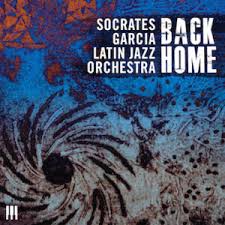
Latin Big Band Jazz From Socrates Garcia: "Back Home"

This article was first published at Blogcritics

As Socrates Garcia, the Dominican born creative force behind his big band, the Socrates Garcia Latin Jazz Orchestra, explains in the liner notes to its February release, Back Home, the album has him “arriving to a place where I could combine my heritage with the aesthetics of jazz” and move that combination “towards a promising future for this symbiotic relationship.” Although the idea of creating such a symbiotic relationship may not be particularly new, Garcia and his orchestra bring it to life with dynamic force. Back Home is top of the line big band Latin Jazz.

The seven-track album, all composed and arranged by Garcia, begins with the high voltage “Vantage Point,” a tune based on the merengue that runs close to nine minutes. It features Ryan Miiddagh on the baritone sax and pianist Manuel Tejada as well as some real energy from the percussion section. This is followed by “Calle El Conde a Las 8:00,” a composition that celebrates the liveliness of what the composer remembers as a vibrant cultural neighborhood of his youth. Will Swindler on soprano sax and Jordan Skomal on trumpet capture the essence of the local scene.


The tenor sax of Kenyon Brenner highlights both “Celebration of the Butterflies,” a salute to the Mirabel sisters, anti-Trujillo activists assassinated in 1960 and the subjects of the novel and later the film In the Time of the Butterflies, and the album’s title song.

Back Home closes with a three-part suite entitled “Dominican Suite for Jazz Orchestra,” a major piece much in the tradition of the famed big band suites of the Duke Ellington Orchestra.  The first part is “Homage to Tavito.” Tavito Vasquez is a saxophonist, Garcia explains, revered as the “Charlie Parker of the Caribbean.” Garcia uses it as an opportunity to explore the symbiotic union of bebop and the merengue. “Bachata for Two” follows. The bachata is a genre born in the countryside of the Dominican Republic and sometime disparaged by the elites as peasant music. Garcia and the orchestra demonstrate the folly of disparaging any musical genre. “From Across the Street” concludes the album. It is the only track which includes a bit of vocal work. It is based on Garcia’s memories of a woman from his infancy who used to play a percussion dominated Dominican folk music called palos or atabales.

The suite provides a fine conclusion to Socrates Garcia’s jazz soaked tribute to his homeland.


Sunday, February 19, 2012

Music Review: New World Beat - After Carnival

This article was first published at Blogcritics

After Carnival, the debut album of NewWorld Beat, a world music jazz fusion ensemble out of Miami, is the kind of music that seems deceptively simple on first hearing, but grows increasingly complex and interesting each time you listen.  Led by the vibraphone of composer Richard Sprince, New World Beat, runs through a set of exotic melodies played over a torrent of Latin American rhythms that serves as a template for some innovative solo improvisation.  This is not the kind of music that makes for easy listening, no matter first impressions; this is music that rewards continued listening.


Of the eleven tracks on the album, nine are original Sprince compositions and two are covers of Pat Metheny pieces.  Notes on the band's website indicate that "After Carnival is intended to stand as a whole, developing a story and ambience from track to track.  This structure is paralleled by the through-composed nature of each number."  This is somewhat contradicted by the indication that some of the tracks are featured as singles.  I must admit that though I would be hard put to define exactly what that story might be, I will buy the band's assertion and keep trying.  There is, after all, a clearly consistent tone and atmosphere running through the album. 

Stand out tracks include the haunting jazz tango "Adios, Buenos Aires" inspired we are told by a midnight ferry trip across the Rio de la Plata.  It features some impressive solo work by the group's saxophonist, Matt Vashlishan.  Vashlishan, playing both the alto and the soprano sax, also contributes fine solos on the title track "After Carnival" as well as "Fantasia de Carnival" and the album's closing song, Pat Metheny's "Sueno Con Mexico."  Guest artist flautist Jorge Pardo adds a wistful solo to the bolero rhythms of "Song For Brazil," which also has some nice solo moments from Sprince on the vibes.  Like some of the other songs it also uses the vocal harmonies of Tony Cruz and Terezinha Valdis.

Videos of longer live versions of the album's opening song "Beyond the Clouds" and the samba varietal "Partido Alto" are available on the band's website.  The recorded versions of both have similar dynamic solo work on the soprano sax from the ubiquitous Vashlishan.  "The Dance Has Just Begun" introduces guest guitarist Gary Damanti for a solo after the vocalized melody.  He is followed again by. . . .guess who.  "Last Train Home" is the other Metheny compostion slowed down from the original and introducing three year old Alejandro Pino-Sprinz with an a cappella outro—a little cutesy perhaps, but it's hard to get upset with proud parents indulging themselves for a few seconds.

The other members of New World Beat are Diogo Brown, fretless bass, Tom Lippincott, 8 string guitar, Goran Rista, drums, Cezar Santana, nylon string guitar and Dwili Dewongy, percussion.  All in all, After Carnival is an auspicious beginning.

Wednesday, November 30, 2011

Music Review: Duduka Da Fonseca - Duduka Da Fonseca Trio Plays Toninho Horta

This article was first published at Blogcritics.


I must confess that before receiving a copy of Brazilian drummer Duduka Da Fonseca's latest album, I was unfamiliar with his previous work and that is my loss.  Not only has he been playing with some of the biggest names in the jazz pantheon—Gerry Mulligan, Herbie Mann, Lee Konitz, Joe Lovano, among others, not only has he toured with his world renowned countrymen Antonio Carlos Jobim and Astrud Gilberto, but his 2009 CD Brazilian Trio – Forests was nominated for a Latin Grammy.  A musician with that kind of resume should not fall below the radar. 

More importantly a musician that can come up with a musical treat like his newly released Duduka Da Fonseca Trio Plays Toninho Horta demands attention.  Joining the drummer on this set originally recorded back in 2009 are pianist David Feldman and bassist Guto Wirtti both of whom he had worked with when they played on an album for Brazilian sax player Paulo Levi.  Talking about that session in the liner notes, Fonseca says: "We started the session and I said to myself, 'Wow!! This rhythm session sounds so right!! It feels like a walk on Ipanema Beach."  Back in New York, he goes on, he thought it would be a good idea to do a trio project with them, and he was absolutely right.  Feldman is a dynamic young pianist with a lyrical sensitivity and Wirtti handles the bass with finesse. 

Fonseca's next big idea, as he continues to explain it, was to devote their record to the music of Brazilian singer/songwriter/guitarist, Toninho Horta.  While Horta may not have the same kind of worldwide recognition accorded to the likes of Jobim, Fonseca says that he "touches my heart with his amazing music."  Indeed, you can hear it in their playing.  Horta's music and Fonseca's trio seem a perfect fit.  Horta, himself, writes that they transformed his songs "into true instrumental pearls," and adds "the conceptual innovations of groove, melodic interpretation and form left me truly enchanted." 

Listen to "Aqui,Oh!,"  the first  of nine tracks on the album and then listen to Horta's own version on  Myspace and you'll get some idea of the kind of transformation he's talking about.  They play down the dance rhythm and turn it into a vehicle for some inventive solo improvisation by Feldman.  Indeed, Feldman's sensitive phrasing is front and center on nearly all of the tracks. More often than not Fonseca himself is content to remain in the background. The only lengthy drum solo is on the last song on the album, "Retrato Do Gato," an up-tempo swinger that also features some nice interaction between drummer and pianist.  Wirtti gets a chance to highlight the bass in the intense, atmospheric ballad "Moonstone."  He also gets in some licks on the upbeat "Francisca."  "De Ton Pra Tom" has the sound of something out of the great American songbook while "Luisa" takes you right back to its Brazilian roots. 

If you like your jazz on the mellow side with a Latin vibe, this is an album you want to listen to.  Horta's music and the Fonseca's trio: this is a marriage made if not in heaven at least on a heavenly beach.