Monday, April 29, 2013

Annalisa Ewald - Live at the Factory Underground

This article was first published at Blogcritics


For approximately half an hour, no doubt energized by the lively audience, Ewald played a set of 15 classical guitar pieces  chosen she tells us from “Argentine tangos, Spanish folk music, Brazilian choros, and even a couple of ‘cousins’ from the Renaissance courts.” It is an eclectic sampling of the best in the musical repertoire available for the instrument. Perhaps the only thing that’s missing is a transcription of the adagio from Rodrigo’s Concierto de Aranjuez,” a piece that no guitar recital wherever it is held should be without. Although, it does open the possibility of some future recording of the whole concerto with the full orchestra in tow. Ewald plays with skill and taste; it would be a treat to hear her in all out concert mode, this despite her protestations that the Factory Underground setting was “most unlike Carnegie Hall. Which was all to the good.” I guess I would just like to hear her play what I imagine is the most popular classical piece for the guitar in all its splendor.

She opens with “Soleares” a composition she calls “the mother of flamenco” in her notes to each of the tracks. This is followed by “Farucca,” a “light song” from the Galicia region of northwestern Spain “which speaks of sunny subjects like love and bawdy humor.” “Monotonia” is a composition particularly appropriate, she tells us, for the more informal setting, its composer Rodrigo Riera among those in 20th century Latin America who were celebrating popular guitar music. “Por Una Cabeza” is the first of the tangos on the album, the famous “La Cumparsita” comes later embedded in “Milonga.”

Ewald is joined by her 15 year old student Caroline Golino for two Renaissance compositions: “Mr. Dowland’s Midnight” originally written for solo lute and “Les Buffons,” a variation on a familiar dance theme by W. Heckel which she calls “a perfect pub piece.” There is a “Prelude” by Hector Villa-Lobos giving a nod to the concert hall. She closes with two bonus tracks “Vals Venezolano No.1” and “No. 2” by Antonio Lauro, one of the first guitar composers, she explains, “to meld the European and Latin musical traditions.”
Annalisa Ewald may not have the name recognition that a guitarist like Sharon Isbin has, but if she produces a few more albums like this one, she’ll be right up there. Not only does Live at The Factory Underground show her joy in the music, it makes that joy contagious.


Sunday, April 28, 2013

Music Review: Michel Camilo - What's Up?

This article was first published at Blogcritics


First there was John Medeski’s A Different Time, then there was Billy Lester’s Storytime, and now comes Michel Camilo with What’s Up, the third in a trio of excellent solo piano jazz albums I’ve reviewed in the past few weeks. A Grammy, Emmy and Latin Grammy Award winning pianist and composer, Camilo has put together a varied collection of seven original compositions as well as four  Latin and jazz standards highlighting the breadth of his range on the instrument. As the pianist explains: “This recording expresses my desire to explore the contrasts of color, harmonic texture, rhythm and nuances of jazz piano playing. Here is my love for the many musical influences I have been exposed to over the years.”

Whether he is revisiting his Afro-Caribbean roots in tunes like Compay Segundo’s “Chan Chan” and his own “Island Beat” or presenting his “take on the perpetual polyrhythmic intricacies” of Paul Desmond’s
classic “Take Five,” he is taking up what he calls the biggest challenge for any jazz pianist “to contribute to the rich tradition of solo piano styles.” It is this mosaic of different styles all developed with consummate virtuosity which is the hallmark of the album.

From the upbeat energy of the title song which begins the set with an energetic boogie vibe to the final contemplative coda, “At Dawn” the focus is on stylistic variety. A Camilo original like “A Place in Time” has a darker tone with roots in the classical nocturne while “Sandra’s Serenade” plays like a piece that could have come from the pen of a composer like Erik Satie. “On Fire” is a show piece for the pianist’s flashing fingers as he burns over the keys. It is a pianistic tour de force that will leave you with your mouth hanging open. A classic like “Alone Together” gets a blues treatment, and Cole Porter’s “Love for Sale” has a long improvised introduction leading to the familiar melody.

What’s Up is the second release in Sony Classical’s resurrection of the fabled OKeh jazz label which is focusing on what they call “Global Expressions in Jazz.” While it is Camilo’s first effort for OKeh, it does mark the pianist’s return to the Sony Music family where he had previously recorded for Portrait, Epic and Columbia.

Friday, April 26, 2013

Comedy Review: Al Madrigal - Why is the Rabbit Crying?

This article was first published at Blogcritics


Al Madrigal’s Comedy Central Stand-up Special Why is the Rabbit Crying? scheduled to close out “Stand-up Month” on April 26th will be available in an extended and uncensored CD/DVD Combo at the end of the month as well. For something a bit over an hour, Madrigal talks about everything from the  Cholo coach of his kid’s midget football team and the competition for snack assignments to his young daughter’s invasion of his “me time” in the bathroom and his ideas for naming wi/fi networks. It takes the comic a while to hit his stride, but once he gets going, he turns in a fine set. He has the kind of pleasant, good natured stage presence that has the audience pulling for him from the moment he opens his mouth.

Perhaps best known for his appearances as a correspondent on The Daily Show with Jon Stewart, Madrigal has also shown up on a variety of late night shows including Conan, The Tonight Show, Lopez Tonight, Chelsea Lately and Jimmy Kimmel Live. He has been named Best Stand-Up Comedian by the HBO/U.S. Comedy Arts Festival. 

Essentially a story teller, he is at his best spinning out tales at length. His story about the cleaning woman who mistakenly ate some chocolates laced with hallucinogenic mushrooms back in his college days is hilarious, and the punch line of his rant on a strip mall massage is an absolute classic. His riffs on his family and raising his kids are amusing gems about the perils of child rearing. Of course, politically incorrect bits like his explanation of what a Cholo is and his search for a day laborer, he only manages to get away with because of his own Latin heritage. Even the title of the special which is a reference to gang tattoos would be taboo for an Anglo comedian. Sample video clips are available on the Comedy Central site.


Bonus material on the DVD include Madrigal’s half hour special Comedy Central Presents Al Madrigal with audio commentary by the comedian and Louis Katz, his appearance on the network’s Shorties Watchin’ Shorties and his report on the Tucson ban on Mexican-American studies from The Daily Show.

Sunday, March 10, 2013

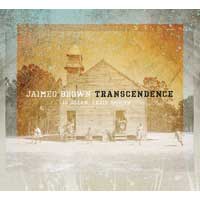
Transcendence: Debut Album of Jaimeo Brown

This article was first published at Blogcritics

The bio on New York drummer Jaimeo Brown’s website describes Transcendence, his debut album as “a tapestry of African-American spirituals, along with East Indian concepts, electronic textures, acoustic jazz and blues.” “I focused on the Black spiritual as the root of the material because of its raw unfeigned expression,” he adds. “Hope is in abundance in these spirituals.” The publicity for the new album hammers home its eclecticism, describing Brown as “a brilliant 34-year-old drummer, composer and conceptualist” and adding hip hop and modern jazz to Brown’s list to make what they call an “intriguing amalgam.” Tapestry, amalgam, mosaic, montage, medley—one metaphor is as good as another to give a sense of what Brown is doing on this album, but only a sense. The only way to get real understanding of the soundscape he is creating is to listen to the album.

And whatever you decide to call it, the one thing that is clear from the very first time you hear it is that this is an innovative album unlike any other. In the tradition of some of the true jazz giants Jaimeo Brown has developed a voice all his own. Like them he has taken the breeze from the trees and the wail from the jail and where they came up with the blues, he’s come up with something just as exciting, but something yet to be named.

Brown is joined by JD Allen on tenor sax and GRAMMY nominated guitarist Chris Sholer as well as a wealth of guest talent including pianist Geri Allen, harmonium player Andrew Shantz, East Indian vocalist Falu, and keyboardist Kelvin Sholar. Add to that some home grown family talent. There’s his parents bassist Dartanyan Brown and pianist/flautist Marcia Miget, his sister vocalist Marsha Rodriguez, and his two year old daughter who makes her vocal debut on a song called “I Said.” He also uses vocal samplings from the Gee ‘s Bend Quilters spiritual singers from rural Alabama, a group he came across while doing master’s thesis research on “How the Black Church Affected Jazz.”

There are a dozen songs on the album’s playlist, but the names would mean little. Suffice it to say that you can hear the influence of the spiritual and the blues translated into a contemporary jazz sound. The album itself is scheduled for release in early April, but right now you can get at least a taste of what Brown is doing with audio samples of “Mean World” which opens the album, “I Know I’ve Been Changed,” and the album’s final piece “This World Ain’t My Home.” This last is also available in an extended video. If you like music that pushes the envelope intellectually with emotional intensity, you ought to check it out.


Thursday, March 7, 2013

DVD Review: Chronicle of a Summer

This article was first published at Blogcritics

Chronicle of a Summer is one of those films which is a significant landmark in the history of cinema, but isn’t particularly entertaining. It is important intellectually, from its sociological roots through its experimental methodology to its philosophical and political conclusions. It is important for its technical innovations synching sound and image and making extensive use of the walking camera. It is important for what it tried to do, even if at the end the filmmakers and many of the participants felt they had failed. Unfortunately, important and entertaining are not synonymous. This is not a film that will appeal to a wide audience, but then it is very doubtful its creators, ethnographic filmmaker Jean Rouch and sociologist Edgar Morin, ever meant it to.

Calling their experiment cinema vérité, they set out to make a film about life in France in the sixties using real people, following them in their daily activities, interviewing them about their hopes and the realities of their lives, getting them to interact with one another over dinners and a glass of wine. Given the filmmaker’s leftist leanings, especially those of Morin, it is not strange that the “real” people focused upon were unhappy factory workers, radical students and militant activists.  Morin and Rouch hoped that these people would bond in friendship as a result of their interaction in the film.


 Angelo, Marceline and Mary Lou are in many respects the most compelling characters in the film, but that very captivating screen presence raises one of the central aesthetic questions surrounding Chronicle.  The film is after all a documentary. It is presumably a faithful representation of the reality of these people. But can people be themselves when placed before a camera and under a boom microphone? Doesn’t the observer affect the observed?

Angelo works for Renault. He and his fellow workers spend their days as appendages of the machines they service. He complains about the boredom of the work he despises. He complains about the overseers constant badgering. He complains about the job’s insecurity. We follow him through one of his days: we see him awakened and wolfing down breakfast in his bed; we go with him to work and walk with him home. We are led into the factory and see the actual workers seemingly tied to their machines, even eating their lunches seated at their work stations. Of course Angelo is not happy with his job.

Marceline is a Holocaust survivor in a relationship with a younger student, a relationship that isn’t going particularly well. They have been involved with a group protesting the war in Algiers, one of the hot button issues in the summer of 1960, the summer chronicled in the film. Interestingly this information doesn’t come out in the film. She is both involved in interviewing others and subject of study herself especially with regard to her unhappy romantic relationship.

Mary Lou is an Italian working in Paris in an ill paying job. She lives in an unheated attic and at times seems almost suicidal. If by the end of the film she seems in a better place, it is the result of a new happy relationship, rather than anything that happens in the film. Her interaction with the rest of the interviewees is very limited. Moreover the film doesn’t mention the fact that she was now working in the offices of the Cahiers du cinema where she met the new unnamed boyfriend.

To many viewers, some of the most famous scenes in the movie involving these characters—Marceline’s stroll through the place de la Concorde where she recalls something of her life in the concentration camps, Angelo’s conversation with the African student, Mary Lou’s despairing descriptions of her life--seem sincere because these people are consciously emoting for the camera. The film illustrates the paradox that reality can often appear insincere, sincerity appear to be artifice. One has to ask to what extent the people in the film are being true to themselves, to what extent they are playing the versions of themselves they want the audience to see, preparing the “faces to meet the faces that you meet,” as the poet would have it.

Indeed there is a sense in which the very act of making a film negates the “reality” of what is filmed. At  best, it is reality as shaped by the artist to create the impression of truth to life. After all, Rouch and Morin didn’t simply turn on a camera and present the results.  They shot multiple takes. They edited from what they filmed. They presented their vision. Even as they themselves appear in the film, they present themselves as they want to be seen. And in the famous ending where after their walk through a museum discussing their feelings about what they’ve done, where they failed and where succeded, when Morin leaves Rouch on the street with the somewhat cryptic comment: “nous sommes dans le bain,” often translated as “we’re in trouble,” but newly translated in the Criterion version as “we’re in it,” the suggestion is that they have in fact fallen short of the objective truth they were after.

Their active intrusion on the film is emphasized in the Criterion edition by the inclusion of Une été + 50, a 75 minute documentary from 2011 containing interviews with Morin, Marceline, several of the students and others, plus a great number of outtakes which give a real insight into the filming process. Other bonus features include filmed interviews with Rouch and Marceline and an interview with academic Faye Ginsberg. There is also a thirty odd page booklet filled with still photos, production information and an excellent essay by Sam Di Iorio.

Chronicle of a Summer is a seminal film. If not the kind of film that will appeal to the general movie goer, it is a must see for anyone seriously interested in the history of cinema. And, if you can’t see it on the big screen, the Criterion Collection offers a good alternative.


Tuesday, February 5, 2013

Book Review: The Levanter, by Eric Ambler

This article was first published at Blogcritics


Change a few details and Eric Ambler's thriller The Levanter published over 40 years ago in 1972 could well have been written today. The story, set in Syria in 1970 with most of the Middle-East still in turmoil less than 30 years after the creation of the state of Israel, deals with a Cypriot business man who gets himself caught up in a terrorist plot hatched by a Palestinian splinter group--the kind of terrorist plot that might well be keeping the 24 hour news channels as busy, if not busier than an oil field raid and hostage taking. The more things change, the more they stay the same.

Once again Ambler builds on his patented plot device where an ordinary citizen finds himself thrust into a cloak and dagger world where spies, terrorists and agents, secret and otherwise, ply their trade, a world very much outside his normal experience. As early as Ambler's very first venture in the genre, The Dark Frontier, when he had used the device to parody the thriller genre, Ambler had been enamored with the possibilities created by the idea of the novice in danger. By the time he gets to The Levanter, some 14 novels into his career, it is a device he has perfected. Essentially, it gives the reader a protagonist with whom he can identify, even as there is some reasonable question about his ability to handle the situation. The superhuman heroes like James Bond and Jack Reacher may inspire wish fulfillment, but there is rarely any question about their success. The more realistic protagonist lends the narrative his realism and creates greater suspense about the possible outcome.

Michael Howell has been effectively running a variety of family businesses based in Syria, but reaching throughout the Levant, the Middle East. He is well versed in the baroque bureaucratic chicanery necessary to conducting business. He understands the practicalities of the situation. He knows which palms to grease, which egos to pump. In other words he knows how to get things done. One evening, after his office manager and mistress Teresa reports some questionable purchases at one of his enterprises, he discovers that his factory is being surreptitiously used by members of the Palestinian Action Force to produce detonators to be used in a bombing raid in Israel. To his horror, not only does he find himself unable to stop them, but he finds himself and Teresa forced to join with the terrorists, and use his business acumen to move their plot forward.

In a fast moving first person narrative, mostly from Howell attempting to explain and   justify his actions, but also from an outside journalist and one section from Teresa to lend some further credibility to his story, Ambler manages to keep up the kind of infectious excitement that gets readers joyfully turning pages. Interestingly, sex is nearly absent from the story, and violence is minimal. There are lessons here for the modern thriller writer. Suspense is possible without pages of gore. The threat of violence left to the imagination is often more terrifying than its literal description.

Readers familiar with the work of Ambler will welcome The Levanter's new release in the Vintage Crime/Black Lizard series, as they would welcome an old friend. Readers unfamiliar with his work will find it an opportunity to meet with one of the truly great masters of the thriller genre.

Friday, February 1, 2013

Music Review: Patti LuPone - Far Away Places.

This article was first published at Blogcritics


Who better to headline the opening of 54 Below, a new night club adjacent to the heart of Manhattan's theater district, than perhaps the reigning Broadway diva, Patti LuPone? What better way to inaugurate a new series of recordings of live cabaret shows that with that diva's performance? No better way, given the critical reaction to the LuPone show, no better way by a long shot. Fans will get their chance to hear the set on January 15th when Broadway Records releases the debut disc in their "Live at 54 Below" series, Patti LuPone's Far Away Places..

From the moment LuPone opens her mouth, she has her audience in thrall. These are people, friends and fans, who know what she's selling and can't wait to buy. Their excitement is palpable and she feeds on it. It is an excitement that comes through even on the CD.

Wanderlust is the theme of the evening, as the singer takes the audience on a journey over water to far away places, interspersed with the kind of clever banter you've come to expect from a cabaret performer. While the clever jokes can get old with the repeated play the album is likely to generate, whether she is talking about her talent for accents or even her Sicilian heritage, they are certainly entertaining enough in the moment.

Still no one is going to buy the CD for the incidental comedy. The music is the thing, and the music can be 'fabulous.' She opens by setting the theme with "Gypsy in My Soul" and follows with a swinging jazzy take on Willie Nelson's "Night Life" in which she redundantly introduces herself and welcomes her audience. The first of four Kurt Weill tunes, "Bilbao Song" is next. According to the liner notes, LuPone was especially keen on performing Weill and her versions of "Bilbao" and later "Pirate Jenny” are among the evening's highlights. Somewhat surprisingly, she ends the show with "September Song" in spite of its opening lines.

Variety is the key to the set list. There as atmospheric, smoky "I Cover the Waterfront," a bluesy "Traveling Light," and a sprawling disco attack on the Bee Gee's "Nights on Broadway." There is a playfully cheeky version of "By the Sea," from Sweeny Todd and a dramatically stylish performance of Edith Piaf's "Hymn to Love." She does some jazzy phrasing on "I Wanna Be Around" before turning in a comic direction. Cole Porter's "Come to the Supermarket in Old Peking" takes her on a romp all over the musical world, ending in an homage to "New York, New York." A sweetly yearning treatment of the album's title song "Far Away Places" and an exotic version of Friedrich Hollaender's "Black Market" that will make you forget Marlene Dietrich round out the album.

Accompanying LuPone are Antony Geralis (accordion and keyboards), Larry Saltzman (guitar and banjo), Andy Stein (violin and saxophone) and Paul Pizzuti (drums and percussion). Music director and arranger Joseph Thalken plays piano and helps with vocals.