Sunday, March 10, 2013

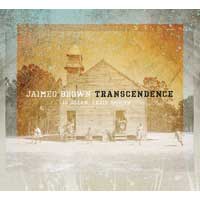
Transcendence: Debut Album of Jaimeo Brown

This article was first published at Blogcritics

The bio on New York drummer Jaimeo Brown’s website describes Transcendence, his debut album as “a tapestry of African-American spirituals, along with East Indian concepts, electronic textures, acoustic jazz and blues.” “I focused on the Black spiritual as the root of the material because of its raw unfeigned expression,” he adds. “Hope is in abundance in these spirituals.” The publicity for the new album hammers home its eclecticism, describing Brown as “a brilliant 34-year-old drummer, composer and conceptualist” and adding hip hop and modern jazz to Brown’s list to make what they call an “intriguing amalgam.” Tapestry, amalgam, mosaic, montage, medley—one metaphor is as good as another to give a sense of what Brown is doing on this album, but only a sense. The only way to get real understanding of the soundscape he is creating is to listen to the album.

And whatever you decide to call it, the one thing that is clear from the very first time you hear it is that this is an innovative album unlike any other. In the tradition of some of the true jazz giants Jaimeo Brown has developed a voice all his own. Like them he has taken the breeze from the trees and the wail from the jail and where they came up with the blues, he’s come up with something just as exciting, but something yet to be named.

Brown is joined by JD Allen on tenor sax and GRAMMY nominated guitarist Chris Sholer as well as a wealth of guest talent including pianist Geri Allen, harmonium player Andrew Shantz, East Indian vocalist Falu, and keyboardist Kelvin Sholar. Add to that some home grown family talent. There’s his parents bassist Dartanyan Brown and pianist/flautist Marcia Miget, his sister vocalist Marsha Rodriguez, and his two year old daughter who makes her vocal debut on a song called “I Said.” He also uses vocal samplings from the Gee ‘s Bend Quilters spiritual singers from rural Alabama, a group he came across while doing master’s thesis research on “How the Black Church Affected Jazz.”

There are a dozen songs on the album’s playlist, but the names would mean little. Suffice it to say that you can hear the influence of the spiritual and the blues translated into a contemporary jazz sound. The album itself is scheduled for release in early April, but right now you can get at least a taste of what Brown is doing with audio samples of “Mean World” which opens the album, “I Know I’ve Been Changed,” and the album’s final piece “This World Ain’t My Home.” This last is also available in an extended video. If you like music that pushes the envelope intellectually with emotional intensity, you ought to check it out.


Thursday, March 7, 2013

DVD Review: Chronicle of a Summer

This article was first published at Blogcritics

Chronicle of a Summer is one of those films which is a significant landmark in the history of cinema, but isn’t particularly entertaining. It is important intellectually, from its sociological roots through its experimental methodology to its philosophical and political conclusions. It is important for its technical innovations synching sound and image and making extensive use of the walking camera. It is important for what it tried to do, even if at the end the filmmakers and many of the participants felt they had failed. Unfortunately, important and entertaining are not synonymous. This is not a film that will appeal to a wide audience, but then it is very doubtful its creators, ethnographic filmmaker Jean Rouch and sociologist Edgar Morin, ever meant it to.

Calling their experiment cinema vérité, they set out to make a film about life in France in the sixties using real people, following them in their daily activities, interviewing them about their hopes and the realities of their lives, getting them to interact with one another over dinners and a glass of wine. Given the filmmaker’s leftist leanings, especially those of Morin, it is not strange that the “real” people focused upon were unhappy factory workers, radical students and militant activists.  Morin and Rouch hoped that these people would bond in friendship as a result of their interaction in the film.


 Angelo, Marceline and Mary Lou are in many respects the most compelling characters in the film, but that very captivating screen presence raises one of the central aesthetic questions surrounding Chronicle.  The film is after all a documentary. It is presumably a faithful representation of the reality of these people. But can people be themselves when placed before a camera and under a boom microphone? Doesn’t the observer affect the observed?

Angelo works for Renault. He and his fellow workers spend their days as appendages of the machines they service. He complains about the boredom of the work he despises. He complains about the overseers constant badgering. He complains about the job’s insecurity. We follow him through one of his days: we see him awakened and wolfing down breakfast in his bed; we go with him to work and walk with him home. We are led into the factory and see the actual workers seemingly tied to their machines, even eating their lunches seated at their work stations. Of course Angelo is not happy with his job.

Marceline is a Holocaust survivor in a relationship with a younger student, a relationship that isn’t going particularly well. They have been involved with a group protesting the war in Algiers, one of the hot button issues in the summer of 1960, the summer chronicled in the film. Interestingly this information doesn’t come out in the film. She is both involved in interviewing others and subject of study herself especially with regard to her unhappy romantic relationship.

Mary Lou is an Italian working in Paris in an ill paying job. She lives in an unheated attic and at times seems almost suicidal. If by the end of the film she seems in a better place, it is the result of a new happy relationship, rather than anything that happens in the film. Her interaction with the rest of the interviewees is very limited. Moreover the film doesn’t mention the fact that she was now working in the offices of the Cahiers du cinema where she met the new unnamed boyfriend.

To many viewers, some of the most famous scenes in the movie involving these characters—Marceline’s stroll through the place de la Concorde where she recalls something of her life in the concentration camps, Angelo’s conversation with the African student, Mary Lou’s despairing descriptions of her life--seem sincere because these people are consciously emoting for the camera. The film illustrates the paradox that reality can often appear insincere, sincerity appear to be artifice. One has to ask to what extent the people in the film are being true to themselves, to what extent they are playing the versions of themselves they want the audience to see, preparing the “faces to meet the faces that you meet,” as the poet would have it.

Indeed there is a sense in which the very act of making a film negates the “reality” of what is filmed. At  best, it is reality as shaped by the artist to create the impression of truth to life. After all, Rouch and Morin didn’t simply turn on a camera and present the results.  They shot multiple takes. They edited from what they filmed. They presented their vision. Even as they themselves appear in the film, they present themselves as they want to be seen. And in the famous ending where after their walk through a museum discussing their feelings about what they’ve done, where they failed and where succeded, when Morin leaves Rouch on the street with the somewhat cryptic comment: “nous sommes dans le bain,” often translated as “we’re in trouble,” but newly translated in the Criterion version as “we’re in it,” the suggestion is that they have in fact fallen short of the objective truth they were after.

Their active intrusion on the film is emphasized in the Criterion edition by the inclusion of Une été + 50, a 75 minute documentary from 2011 containing interviews with Morin, Marceline, several of the students and others, plus a great number of outtakes which give a real insight into the filming process. Other bonus features include filmed interviews with Rouch and Marceline and an interview with academic Faye Ginsberg. There is also a thirty odd page booklet filled with still photos, production information and an excellent essay by Sam Di Iorio.

Chronicle of a Summer is a seminal film. If not the kind of film that will appeal to the general movie goer, it is a must see for anyone seriously interested in the history of cinema. And, if you can’t see it on the big screen, the Criterion Collection offers a good alternative.


Tuesday, February 5, 2013

Book Review: The Levanter, by Eric Ambler

This article was first published at Blogcritics


Change a few details and Eric Ambler's thriller The Levanter published over 40 years ago in 1972 could well have been written today. The story, set in Syria in 1970 with most of the Middle-East still in turmoil less than 30 years after the creation of the state of Israel, deals with a Cypriot business man who gets himself caught up in a terrorist plot hatched by a Palestinian splinter group--the kind of terrorist plot that might well be keeping the 24 hour news channels as busy, if not busier than an oil field raid and hostage taking. The more things change, the more they stay the same.

Once again Ambler builds on his patented plot device where an ordinary citizen finds himself thrust into a cloak and dagger world where spies, terrorists and agents, secret and otherwise, ply their trade, a world very much outside his normal experience. As early as Ambler's very first venture in the genre, The Dark Frontier, when he had used the device to parody the thriller genre, Ambler had been enamored with the possibilities created by the idea of the novice in danger. By the time he gets to The Levanter, some 14 novels into his career, it is a device he has perfected. Essentially, it gives the reader a protagonist with whom he can identify, even as there is some reasonable question about his ability to handle the situation. The superhuman heroes like James Bond and Jack Reacher may inspire wish fulfillment, but there is rarely any question about their success. The more realistic protagonist lends the narrative his realism and creates greater suspense about the possible outcome.

Michael Howell has been effectively running a variety of family businesses based in Syria, but reaching throughout the Levant, the Middle East. He is well versed in the baroque bureaucratic chicanery necessary to conducting business. He understands the practicalities of the situation. He knows which palms to grease, which egos to pump. In other words he knows how to get things done. One evening, after his office manager and mistress Teresa reports some questionable purchases at one of his enterprises, he discovers that his factory is being surreptitiously used by members of the Palestinian Action Force to produce detonators to be used in a bombing raid in Israel. To his horror, not only does he find himself unable to stop them, but he finds himself and Teresa forced to join with the terrorists, and use his business acumen to move their plot forward.

In a fast moving first person narrative, mostly from Howell attempting to explain and   justify his actions, but also from an outside journalist and one section from Teresa to lend some further credibility to his story, Ambler manages to keep up the kind of infectious excitement that gets readers joyfully turning pages. Interestingly, sex is nearly absent from the story, and violence is minimal. There are lessons here for the modern thriller writer. Suspense is possible without pages of gore. The threat of violence left to the imagination is often more terrifying than its literal description.

Readers familiar with the work of Ambler will welcome The Levanter's new release in the Vintage Crime/Black Lizard series, as they would welcome an old friend. Readers unfamiliar with his work will find it an opportunity to meet with one of the truly great masters of the thriller genre.

Friday, February 1, 2013

Music Review: Patti LuPone - Far Away Places.

This article was first published at Blogcritics


Who better to headline the opening of 54 Below, a new night club adjacent to the heart of Manhattan's theater district, than perhaps the reigning Broadway diva, Patti LuPone? What better way to inaugurate a new series of recordings of live cabaret shows that with that diva's performance? No better way, given the critical reaction to the LuPone show, no better way by a long shot. Fans will get their chance to hear the set on January 15th when Broadway Records releases the debut disc in their "Live at 54 Below" series, Patti LuPone's Far Away Places..

From the moment LuPone opens her mouth, she has her audience in thrall. These are people, friends and fans, who know what she's selling and can't wait to buy. Their excitement is palpable and she feeds on it. It is an excitement that comes through even on the CD.

Wanderlust is the theme of the evening, as the singer takes the audience on a journey over water to far away places, interspersed with the kind of clever banter you've come to expect from a cabaret performer. While the clever jokes can get old with the repeated play the album is likely to generate, whether she is talking about her talent for accents or even her Sicilian heritage, they are certainly entertaining enough in the moment.

Still no one is going to buy the CD for the incidental comedy. The music is the thing, and the music can be 'fabulous.' She opens by setting the theme with "Gypsy in My Soul" and follows with a swinging jazzy take on Willie Nelson's "Night Life" in which she redundantly introduces herself and welcomes her audience. The first of four Kurt Weill tunes, "Bilbao Song" is next. According to the liner notes, LuPone was especially keen on performing Weill and her versions of "Bilbao" and later "Pirate Jenny” are among the evening's highlights. Somewhat surprisingly, she ends the show with "September Song" in spite of its opening lines.

Variety is the key to the set list. There as atmospheric, smoky "I Cover the Waterfront," a bluesy "Traveling Light," and a sprawling disco attack on the Bee Gee's "Nights on Broadway." There is a playfully cheeky version of "By the Sea," from Sweeny Todd and a dramatically stylish performance of Edith Piaf's "Hymn to Love." She does some jazzy phrasing on "I Wanna Be Around" before turning in a comic direction. Cole Porter's "Come to the Supermarket in Old Peking" takes her on a romp all over the musical world, ending in an homage to "New York, New York." A sweetly yearning treatment of the album's title song "Far Away Places" and an exotic version of Friedrich Hollaender's "Black Market" that will make you forget Marlene Dietrich round out the album.

Accompanying LuPone are Antony Geralis (accordion and keyboards), Larry Saltzman (guitar and banjo), Andy Stein (violin and saxophone) and Paul Pizzuti (drums and percussion). Music director and arranger Joseph Thalken plays piano and helps with vocals.

Thursday, January 31, 2013

Les Misérables 10th anniversary concert: Review

This article was first published at Blogcritics


The newly remastered DVD of the glorious 1995 tenth anniversary concert of Les Misérables with 5.1 Surround Sound  released last November by BBC Home Entertainment has got to be the definitive recorded version of the much beloved musical to date. Not only is it a presentation of nearly the compete show, but it gathers together what is often thought of as the dream cast for the performance. Music is in the hands of the Royal Philharmonic Orchestra with the addition of a chorus 150 voices strong. It is nothing less than a complete joy.

That it comes so close in time to the opening of its Academy Award nominated celluloid cousin is perhaps a mixed blessing. No doubt it will profit some from the hoopla and publicity surrounding the film. Those movie goers who enjoy the film may well want to hear what it sounded like on stage. On the other hand there will be those so impressed by the star power of a Hugh Jackman and maybe even an Anne Hathaway that they choose to wait for the film DVD. That would be a mistake. As effective as the film is, it can't compete with the stage version. Even in concert, where the cast is in costume but performs before microphones at the front of the stage, the show is an emotional powerhouse. One gets caught up in it and it is very easy to forget they are on stage.

There is, of course, a more recent concert version celebrating the 25 anniversay of the show available on DVD, and for those of us who thrill to the music of Schönberg and Boublil, it has its excellent moments as well, what it doesn't have is Colm Wilkinson, the original and the definitive Jean Valjean. Not that there is anything wrong with its star, Alfie Boe. He has an operatic voice that soars with power, but he is not Wilkinson. Wilkinson has a voice that is unique and his version of "Who am I?" is a dramatic tour de force, his "One Day More" stirs the soul, his "Bring Him Home" is unmatchable. Indeed once you've heard him, he becomes the measure by which to judge all the Valjeans since and all still to come.
Other definitive performances in the 10 anniversary concert are Alun Armstrong and Jenny Galloway (who also appears in the 25 concert) as the Thénardiers. Lea Salonga who sings the tragically doomed Fantine in the newer version sings the tragically doomed Éponine in the 1995 concert, a role she did in the Broadway production. Moreover in the 1995 concert you get the excellent Michael Ball playing Marius instead of the boyishly miscast Nick Jonas. As for the villain, Philip Quast an Australian, though no Russell Crowe) is a perfect Javert.

From some of the critical reaction to the current film, there are those it would seem, not quite enthralled with the music. They find much of the recitative puerile. They call much of it treacle. They dislike the repetition of the melodies. Of course, they are not the first to find fault with the show. London reviewers dumped on it when it opened in 1985; the London reviewers were wrong, and if popular reaction is any indication so too are the current complainers. While the verdict is still out on the film and its handling of the music, the verdict on the music has long been in. Puerile, treacle, repetitious be damned—audiences love it. There are musical moments in this show that stay with you forever—the comic "Master of the House, "the majestic finale of the first act, Javert's suicide, the death of Valjean, the. . . . but why go on, you really have to list every musical number in the show.

Bonus material on the two disc set includes some twenty minutes of newly discovered interview material with producer Cameron Mackintosh, composer Claude-Michel Schönberg and lyricist Alain Boublil. There is also a British documentary from 1988, Stage by Stage: The Making of Les Mis which was included on the DVD's original release. It features performance footage from a number of productions from around the world. There is also a little commemorative booklet with some nice pictures, but no complete cast listing, and a replica of the ticket to the London reception after the show. 

Wednesday, January 23, 2013

DVD Review: The Tin Drum (Criterion Collection)

This article was first published at Blogcritics


In spite of the critical success of Günter Grass's novel The Tin Drum, the first volume of The Danzig Trilogy, after its publication in 1959, for many years it was considered a daunting if not impossible project to adapt to the screen.  There was the great span of time it covered, the proper tone required to handle its fantastic events, as well as the salacious nature of some of the content. But even more problematical was the novel's central character Oskar Matzerath, a child who on his third birthday refuses to grow any further. He it seemed would have been impossible to cast. That director Volker Schlöndorff and his collaborating screen writer Jean-Claude Carrière were able to come up with a script that impressed Grass with its possibilities and then find a child actor small enough in starure, yet old enough to play Oskar is among the most remarkable things about this most remarkable film.

Originally released in 1979, the film which won both the Palm d'Or at the Cannes Film Festival and the Academy Award for the Best Foreign Language Film was a shortened version of Schlöndorff's initial cut which ran well over the producer's requirement that it run no more than two and a quarter hours. With the film's great success, Schlöndorff wanted to restore the cuts, but producers were adamant that it would be a mistake to tamper with a winner. When in 2009 Schlöndorff was made aware that the original film negative which was being stored in Berlin was about to be destroyed, he agreed to take charge of it and convinced the powers that be to restore the cuts, adding  about 30 minutes to the film's running time. 

This restored director approved high-definition digital transfer of the complete version with a newly translated English subtitles is the centerpiece of the new two disc set in the Criterion Collection.
Although the film begins with a scene in which Oskar's grandmother squatting in a potato field hides a man running from a pair of decidedly Keystone-type Kops under her skirts, the man who is to become Oskar's grandfather, most of the narrative takes place after Oskar's birth, the period after WWI and the rise of the Nazis in what was then the free city of Danzig, now the Polish city of Gdansk. While the novel carries through to 1959, the film ends in 1945 with the Russian invasion of the city and the removal of much of the populace. Of the terms used to characterize the film, absurdist and surreal are the most apt. Schlöndorff, talking about Grass's reaction to their initial screenplay, says that he found it too logical. It needed to emphasize the fantastic. In the end it had to be treated as dark or black comedy, almost slapstick.

Oskar's refusal to grow up, when on his third birthday he receives what is to become his ubiquitous tin drum, is seen as a rejection of the responsibilities that come with adulthood. He wants a darker version of a Peter Pan-like freedom to do as he pleases. Not only does he want to march to his own drum, he wants everyone else to march to it as well. When he discovers that his high pitched screams can shatter glass, he learns that he can manage the adults and get them to do what he wants, without any responsibility for his behavior.  On the other hand, given the childish often immoral behavior of the adults around him, his rejection makes sense. His mother, father and uncle are engaged in a love triangle. They do little to keep their sexual peccadilloes quiet. The German neighbors and townsfolk fall prey to the Nazi pomp and propaganda. If this is what it is like to be an adult, why not remain a child?

Punctuating Oskar's narrative of some of the major historical events of first half of the last century are a series of memorable set pieces, unforgettable moments and images that will bury themselves deep in the consciousness: Oskar's birth as we emerge with him out of his mother's womb almost fully grown, the horse's head filled with eels pulled out  of the ocean by a fisherman as the family walks the beach, the Nazi rally that turns into a waltz fest, the Nazi attack on the nuns walking on the beach. Not to mention the troublesome sexuality of the scene in the bath house between Oskar and Maria the young girl who is destined to become his stepmother—a scene, along with one or two others that was to create some trouble for the film with censors in Canada and Oklahoma.

The Tin Drum is a challenging film that defies easy interpretation. It depicts a world in chaos, a world where traditional values have lost their meaning, and if there are any new ones they aren't working. It is that world where that famous beast has already slouched toward Bethlehem and been born. Schlödorff presents an insane vision of that insane world, a nightmarish vision that is shocking in its visceral accuracy.

Besides the trailer, this new Criterion Collection set includes an illuminating hour long interview with Schlöndorff filmed in 2012, a recording of Grass reading the passage from the novel describing Oskar's disruption of the Nazi rally illustrated by the scene in the film, and a number of early French television interviews with Schlödorff, Carrière and a few of the actors, most notably David Bennent who plays Oskar. The accompanying booklet has an essay, "Bang the Drum Loudly," by critic Geoffrey Macnab and some comments from Grass about the adaptation. It does not include the documentary Banned in Oklahoma which was included as bonus material in Criterion's 2004 release.


Monday, January 14, 2013

Book Review: The Flame Alphabet, by Ben Marcus

This article was first published at Blogcritics


Near the end of The Flame Alphabet Ben Marcus's rhapsodic apocalyptic novel of a world where language has become toxic, Sam, the narrator, commenting on a fable of a young bird blindfolded as a rite of passage, says: "I am no fan of stories, perhaps because they seem more like problems that will never be solved. . . ." And although in many respects, The Flame Alphabet may be the most accessible of Marcus's books, he will find few fans among readers who like Sam prefer problems with solutions. Certainly there is a story here. Certainly that story seems to be saying something about language, communication and human socialization, but just as certainly, exactly what that story is saying may indeed seem like a problem that will never be solved.


Set in an America where adults are becoming mysteriously sickened by the speech of children, the story chronicles one man's attempt to find an antidote and save his family from the growing menace. Sam and his wife Claire seem a normal family with a young teen age daughter. Or at least they would be, if it wasn't that every time the girl speaks, indeed every time they hear any child speak they are sickened. Claire is wasting away, drying up, calcifying. And it isn't only them, all the adults  all over the country are having the same problem. Sam, an amateur, is doing his bumbling best to find a cure. 

They are members of a sect of reconstructionist Jews who worship secretly in huts in the forest, where they listen to sermons piped in electronically from holes in the ground. It is suggested that at least some people think that the sickness originated with these Jews and that somehow there are answers to be found in these hidden "Jew holes." Whether this is an anti-Semitic society looking for scapegoats is never really clear. Much of what is done to deal with the problem is at least a metaphoric allusion to Nazi solutions, final and otherwise. Children are carted away to unknown destinations on buses. People are forced out of their homes. People are used in medical experiments. These measures however are not particularly aimed at the Jews.

If at first the sickness is caused by the speech of children, gradually all language—written or spoken, indeed any form of human communication from any source becomes poisonous. While this would seem to suggest that Marcus is saying something about the existential betrayal of language, it would also suggest that using language to make a point about the failure of language is doomed to fail.  It goes beyond language: "This was not a disease of language anymore, it was a disease of insight, understanding, knowing." The book in a sense becomes the ultimate example of itself. Of course it provides no definitive answers; no answer is the answer. Like the blindfolded bird in the story which learns to live with the blindness, we must learn to live without the noise of language. Yet when it comes right down to it, Sam like Marcus turns to language. This is the ultimate paradox for the writer. Language is as likely to confuse as not. Words don't work, but what else does he have?

On the other hand, if in fact, Marcus is maintaining the inadequacy of language it is as likely as not that everything I have just said is inadequate. In the end, what can one say about The Flame Alphabet with any definitiveness. Certainly nothing definitive about what it all means. Any reader looking for definitive would do well to look elsewhere. On the other hand the reader happily willing to be teased out of thought by the venom of language will find The Flame Alphabet one of the most interesting of books of recent years.